
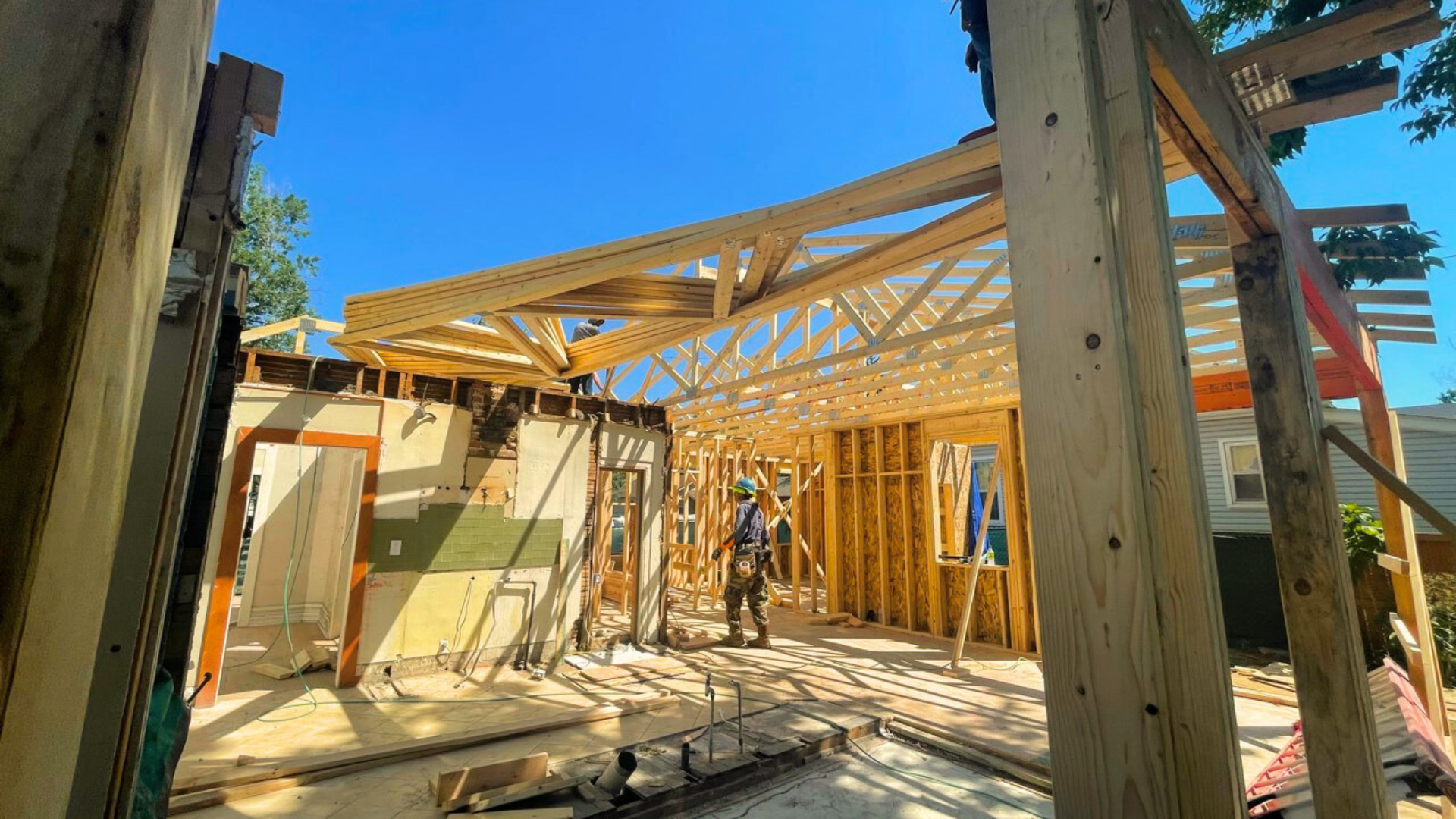
Pop Top Home Addition in progress by Sustainable Design Build.
Home addition permit timelines in Denver can vary dramatically depending on project complexity, zoning conditions, structural modifications, and neighborhood restrictions. While some additions move through permitting relatively efficiently, projects involving pop tops, second-story additions, lot coverage issues, or older homes often require additional engineering review and coordination before approval.
One of the biggest misconceptions homeowners have when planning an addition is assuming all permits move through Denver at roughly the same pace. In reality, approval timelines can vary significantly depending on the type of project, the neighborhood, and the structural conditions of the home.
Some projects receive approvals relatively quickly, while others encounter multiple rounds of review, revisions, engineering coordination, and zoning analysis before construction can begin.
For homeowners researching the overall cost of a home addition in Denver, understanding what slows projects down can help avoid major surprises during planning.
According to SDB’s guide on Denver permit timelines in 2026, project complexity remains one of the largest factors affecting permit review durations throughout the city.
Simple Additions Usually Move Faster
In general, additions that involve fewer structural modifications tend to move through planning and permitting more efficiently.
Projects that may encounter fewer complications include:
- smaller rear additions
- interior reconfigurations
- non-structural remodels
- modest ground-level expansions
These projects often avoid:
- major engineering revisions
- height compliance review
- extensive structural reinforcement
- large zoning conflicts
However, even smaller projects can become more complex if older homes or utility modifications are involved.
Why Second-Story Additions Often Take Longer
Second-story additions and pop tops frequently require additional review because they substantially alter the structure of the existing home.
Homeowners researching Denver pop top costs often discover that building upward introduces significantly more engineering coordination than many ground-level additions.
Second-story projects commonly require:
- structural reinforcement analysis
- roof removal planning
- framing upgrades
- foundation evaluation
- lateral bracing review
- height compliance verification
Because these projects affect both the structural integrity and exterior massing of the home, review processes are often more involved.
Build Up vs. Build Out Can Affect Permit Complexity
One of the biggest factors influencing review timelines is whether the homeowner plans to expand upward or outward.
Homeowners comparing building up vs building out in Denver quickly discover that both approaches create different permitting challenges.
Building Up Often Triggers:
- height restriction review
- structural engineering analysis
- roofline evaluation
- framing inspections
- neighborhood compatibility concerns
Building Out Often Triggers:
- setback review
- lot coverage analysis
- drainage planning
- excavation review
- utility coordination
In many Denver neighborhoods, lot limitations can make one option substantially more difficult to approve than the other.
Older Denver Neighborhoods Often Require More Review
Neighborhood conditions can heavily influence how quickly projects move through review.
Areas such as:
- Wash Park
- Berkeley
- Highlands
- Sloan’s Lake
- Platt Park
…often contain:
- older homes
- smaller lots
- alley-loaded garages
- tighter setbacks
- evolving neighborhood design patterns
According to the City and County of Denver Community Planning & Development Department, zoning regulations, lot coverage limitations, and neighborhood compatibility standards can all affect project review complexity.
This is one reason homeowners in central Denver frequently encounter more extensive planning coordination than homeowners in areas with larger suburban lots.
Structural Problems Can Delay Projects Unexpectedly
Many older Denver homes were built decades ago and may contain hidden structural or infrastructure issues that are only discovered during design and engineering review.
These conditions can include:
- outdated electrical systems
- undersized framing
- aging plumbing
- foundation settlement
- insufficient load capacity
According to the Colorado Geological Survey, expansive soils throughout portions of the Front Range can also influence structural planning and foundation engineering requirements.
Once these issues are identified, plans often require revision before permits can move forward.
Why Early Planning Matters More Than Ever
One of the best ways homeowners can avoid unnecessary delays is by evaluating feasibility early in the process.
Before finalizing addition plans, homeowners should understand:
- zoning limitations
- structural conditions
- realistic scheduling expectations
- utility requirements
- neighborhood restrictions
Many homeowners begin by reviewing the broader Denver home addition cost guide before comparing:
- building up vs building out in Denver
- Denver pop top costs
- realistic home addition timelines in Denver
Together, these resources help homeowners better understand how permitting, engineering, structural complexity, and neighborhood conditions all work together during the planning process.
Why Homeowners Are Still Choosing Additions Despite Longer Permit Timelines
Even with longer review timelines, many Denver homeowners continue investing in additions because relocating within the current housing market remains increasingly difficult.
According to Zillow housing market research, homeowners continue prioritizing:
- larger square footage
- flexible living space
- updated layouts
- multigenerational functionality
- long-term property value
For many families, expanding an existing home remains more practical than competing for a larger property elsewhere in Denver.
What Homeowners Should Do Before Starting an Addition
Before beginning a home addition project, homeowners should:
- evaluate zoning feasibility
- review structural conditions
- establish realistic budgets
- understand scheduling expectations
- prepare for permitting coordination
Understanding why some projects move faster than others can help homeowners plan more effectively and reduce costly surprises during the design and construction process.
References
City and County of Denver Community Planning & Development. (2026). Development services and zoning resources. https://www.denvergov.org/Government/Agencies-Departments-Offices/Agencies-Departments-Offices-Directory/Community-Planning-and-Development
Colorado Geological Survey. (2026). Geologic hazards and expansive soils. https://coloradogeologicalsurvey.org/
Zillow Research. (2026). Housing market trends and home value insights. https://www.zillow.com/research/
Connect With Us
Planning your next renovation, or maybe you are looking to do a complete remodel for your home? Whatever the task, it can’t hurt to ask. Reach out to our team through this form.
We can schedule a free consultation and discuss everything you need to get your project moving in the right direction. Did we mention, it’s absolutely free?