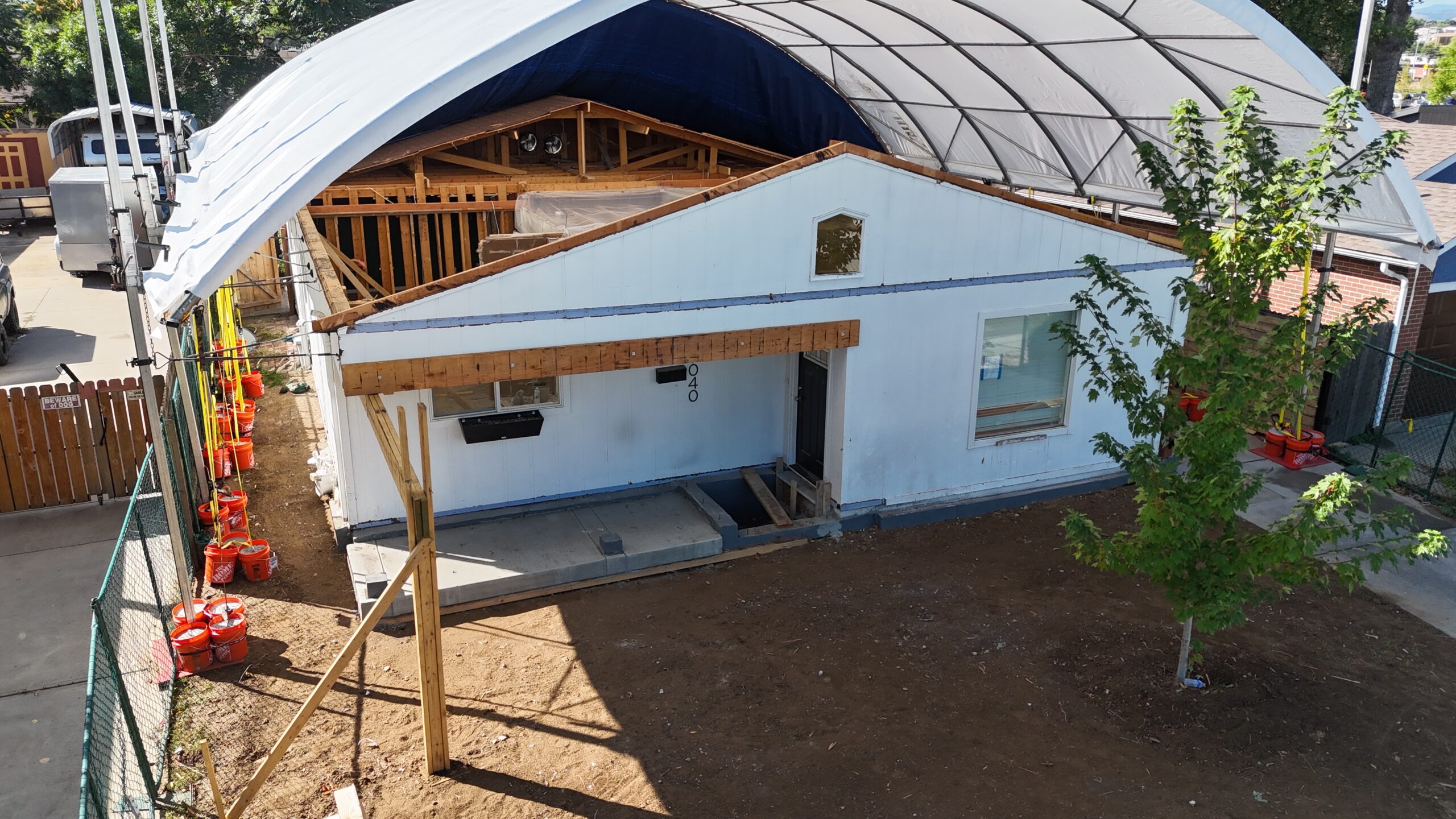
Sustainable Design Build performing a pop top home addition in Wheat Ridge with weather protection installed over the property.
Choosing between building up or building out in Denver depends on lot size, zoning restrictions, structural conditions, and project goals. In many cases, building out is initially less expensive per square foot, but building up can preserve yard space and increase long-term property value in Denver’s tighter urban neighborhoods. Homeowners should evaluate structural requirements, foundation capacity, zoning setbacks, and neighborhood conditions before deciding which approach makes the most financial sense.
Why Denver Homeowners Are Comparing Build Up vs. Build Out
As Denver home prices continue rising, many homeowners are choosing to expand their existing homes instead of relocating. Whether the goal is creating more living space, accommodating a growing family, or improving long-term functionality, additions remain one of the most practical alternatives to purchasing a new property.
One of the biggest decisions homeowners face during early planning is whether to build upward with a second-story addition or expand outward with a ground-level addition. While both options can increase square footage and improve usability, the cost differences between the two approaches can vary significantly depending on the property, neighborhood, and structural conditions.
For many homeowners researching the cost of a home addition in Denver, understanding the difference between building up and building out is an important first step before finalizing design plans or construction budgets.
Understanding the Difference Between a Pop Top, Build Up, and Build Out
Homeowners researching additions in Denver often encounter terms like “pop top,” “build up,” and “build out.” While these phrases are related, they describe different types of expansion projects and construction strategies.
What Is a Pop Top?
A pop top is a type of second-story addition where the existing roof is removed and a new upper level is constructed above the original home. In Denver, pop tops are especially common in neighborhoods with smaller lots and older single-story homes, including Wash Park, Berkeley, and Sloan’s Lake.
Pop tops are popular because they allow homeowners to significantly increase square footage without sacrificing backyard space. These projects often include:
- additional bedrooms
- primary suites
- expanded living areas
- rooftop architectural redesigns
In many Denver neighborhoods, pop tops have become a common solution for homeowners who want more space while staying in highly desirable urban areas.
What Does “Build Up” Mean?
Building up refers broadly to any vertical home expansion. A pop top is one example of building up, but the term can also include partial second-story additions, loft expansions, or raising portions of the roofline to create additional living space.
Building upward is often the preferred option when:
- lot space is limited
- zoning setbacks restrict outward expansion
- homeowners want to preserve outdoor areas
- property values support larger square footage
Because these projects involve structural engineering, roof removal, and framing reinforcement, build-up projects are often more complex than standard ground-level additions.
What Does “Build Out” Mean?
Building out means expanding the home horizontally by extending the structure into available yard or lot space. This approach keeps the home at ground level while increasing the footprint of the existing structure.
Common build-out projects include:
- kitchen expansions
- rear family room additions
- larger primary suites
- sunrooms
- attached guest spaces
Building out can sometimes simplify structural planning because it does not require adding a full second story. However, lot coverage restrictions, setback requirements, drainage considerations, and foundation work can still significantly influence total project costs in Denver.
What Does “Building Up” Mean?
Building up refers to adding square footage vertically by constructing a second-story addition or pop top above an existing home. This approach is especially common in older Denver neighborhoods where lot sizes are smaller and available yard space is limited.
In areas like Wash Park, Berkeley, Highlands, and Platt Park, second-story additions have become increasingly common because homeowners want to preserve outdoor space while expanding interior living areas.
Building up often includes:
- Second-story additions
- Partial second-floor expansions
- Pop tops
- Roof raises
- Structural reframing
These projects can dramatically transform a home’s layout and resale potential, but they also introduce substantial structural complexity.
What Does “Building Out” Mean?
Building out involves expanding the home horizontally by extending the structure into the yard or unused lot space. Ground-floor additions are generally simpler from a structural standpoint because they do not require reinforcing the existing framing system to support an entirely new level.
Common build-out projects include:
- Rear additions
- Expanded kitchens
- Primary suite additions
- Family room expansions
- Sunrooms
- Garage conversions
In neighborhoods with larger lots or fewer setback limitations, building out may initially appear to be the more straightforward option.
Is It Cheaper to Build Up or Build Out in Denver?
There is no universal answer because every property presents different conditions. However, many Denver homeowners discover that the “cheaper” option on paper can become more expensive once site constraints, zoning regulations, and infrastructure upgrades are fully evaluated.
In general:
- Building out often has a lower structural complexity
- Building up can reduce land-use limitations
- Both approaches may trigger utility and permitting upgrades
According to the City and County of Denver Community Planning & Development Department, setbacks, lot coverage rules, and zoning restrictions can heavily influence which option is feasible on a particular property.
When Building Out Can Become Expensive
Many homeowners initially assume building outward will cost less because it avoids major roof removal and second-story framing. However, Denver properties often introduce challenges that increase costs quickly.
1. Lot Coverage and Setback Restrictions
Denver zoning regulations frequently limit how much of a lot can be covered by structures. In established neighborhoods, setbacks may prevent homeowners from expanding outward as much as they hoped.
This is especially common in:
- Older central Denver neighborhoods
- Corner lots
- Historic districts
- Narrow urban parcels
If the property already approaches maximum lot coverage, building out may not be possible without zoning variances or redesigns.
2. Foundation and Excavation Costs
Ground-level additions require:
- New foundations
- Excavation
- Concrete work
- Drainage planning
- Soil considerations
In some cases, utility lines, sewer connections, or grading complications can substantially increase project costs.
The Colorado Geological Survey also notes that soil movement and expansive clay conditions throughout parts of the Front Range can affect foundation planning and structural engineering requirements.
3. Reduced Outdoor Space
For homeowners in Denver’s urban neighborhoods, sacrificing yard space can reduce long-term functionality and resale appeal. This is one reason many homeowners eventually lean toward building up instead of outward expansion.
When Building Up Can Become Expensive
While building up preserves outdoor space, it often requires more substantial structural modifications.
1. Structural Reinforcement
Most older Denver homes were not originally engineered to support a second story. Before construction begins, engineers may determine that:
- existing framing needs reinforcement
- foundation upgrades are necessary
- load-bearing walls require modification
- seismic or lateral bracing improvements are needed
These upgrades can become one of the largest cost variables in second-story additions.
2. Roof Removal and Weather Exposure
Building upward requires partial or complete roof removal during construction. This increases:
- labor complexity
- weather protection needs
- scheduling coordination
- temporary structural support requirements
Denver’s unpredictable weather conditions can also impact construction timelines during roof-open phases.
3. Mechanical System Upgrades
Larger second-story additions often require:
- upgraded HVAC systems
- electrical panel improvements
- plumbing rerouting
- new insulation strategies
Homes with outdated infrastructure may require significant modernization during the process.
Which Option Adds More Property Value?
Both approaches can increase resale value when designed correctly, but the answer often depends on the neighborhood and buyer expectations.
In many Denver neighborhoods, second-story additions can command strong resale premiums because they preserve outdoor living areas while significantly increasing livable square footage.
According to Zillow housing market research, usable square footage, modern layouts, and expanded bedroom counts remain major drivers of home value in competitive urban housing markets.
However, well-designed ground-level additions can also perform exceptionally well when they improve:
- kitchen flow
- indoor-outdoor living
- accessibility
- primary suite functionality
The best option is usually the one that aligns with both the property limitations and the homeowner’s long-term goals.
How Denver Neighborhoods Influence the Decision
Location matters heavily when comparing build up versus build out strategies.
Neighborhoods Where Building Up Is Common
- Wash Park
- Highlands
- Berkeley
- Platt Park
- Sloan’s Lake
These areas often have:
- smaller lots
- alley-loaded garages
- zoning limitations
- strong resale demand for larger homes
Neighborhoods Where Building Out May Be Easier
- Greenwood Village
- Littleton
- Centennial
- Lakewood
- Arvada
Properties in these areas may offer larger lots and fewer spatial constraints, making horizontal additions more practical.
Permitting and Planning Considerations
Both project types require permits, inspections, and design coordination. Depending on the scope of work, homeowners may need:
- zoning reviews
- structural engineering
- survey updates
- utility coordination
- stormwater compliance
- neighborhood compatibility reviews
The Denver permitting process can vary significantly depending on property conditions and project complexity.
Because of these variables, early planning and feasibility evaluations are critical before construction begins.
Which Option Makes More Sense for Your Home?
For homeowners deciding between building up or building out, the right answer usually depends on:
- lot size
- zoning limitations
- structural conditions
- budget goals
- neighborhood trends
- long-term functionality
A thoughtful feasibility analysis can help determine which option offers the best balance between cost, design flexibility, and long-term value.
Homeowners considering additions, second stories, or pop tops often begin by reviewing the broader Denver home addition cost guide to better understand the factors influencing construction pricing throughout the metro area.
References
City and County of Denver Community Planning & Development. (2026). Development services and zoning resources. https://www.denvergov.org/Government/Agencies-Departments-Offices/Agencies-Departments-Offices-Directory/Community-Planning-and-Development
Colorado Geological Survey. (2026). Geologic hazards and expansive soils. https://coloradogeologicalsurvey.org/
Zillow Research. (2026). Housing market trends and home value insights. https://www.zillow.com/research/
Connect With Us
Planning your next renovation, or maybe you are looking to do a complete remodel for your home? Whatever the task, it can’t hurt to ask. Reach out to our team through this form.
We can schedule a free consultation and discuss everything you need to get your project moving in the right direction. Did we mention, it’s absolutely free?