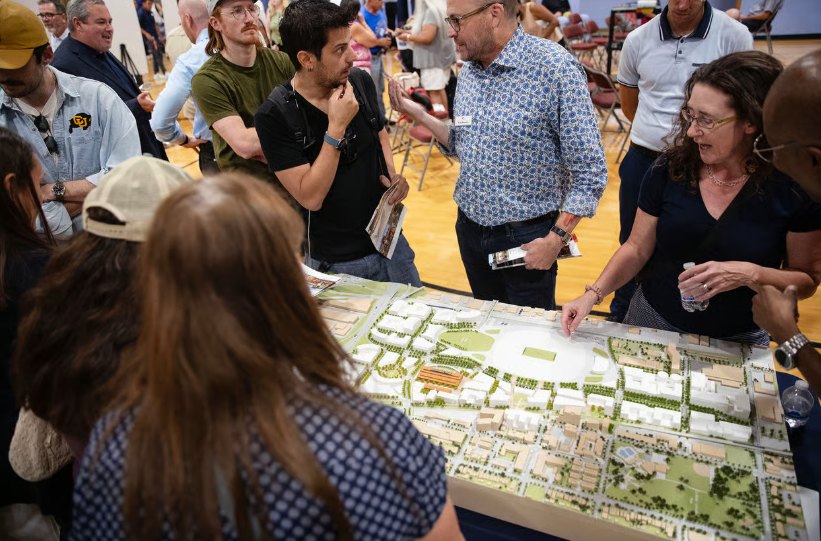
Courtesy of McKenzie Lange, CPR News
The City of Denver has released the first draft of the Burnham Yard Small Area Plan, a 61-page document that will guide the city’s priorities for the former railyard where the Denver Broncos plan to build their next stadium. The draft contains more than 30 policy recommendations and reflects roughly a year of community input from residents who attended open houses and submitted feedback on the future of the 58-acre site in La Alma Lincoln Park.
When we last covered the project in Broncos’ Burnham Yard Stadium Plans Face Critical Deadline as Development Momentum Builds, the conversation centered on land negotiations and the race to start construction by spring 2027. This new draft shifts the focus from the stadium itself to the neighborhood around it, and that is where many Denver homeowners will feel the biggest long-term impact.
Here is a summary of the key takeaways, based on Denverite’s review of the draft plan.
What Is a Small Area Plan, and Why Does It Matter Here?
La Alma Lincoln Park does not yet have a finalized neighborhood plan, which means there have been no area-specific guidelines for how growth should happen there beyond Blueprint Denver, the city’s citywide land use and zoning framework. The Burnham Yard Small Area Plan fills that gap.
It is important to understand what the plan is and is not. The city describes it as a flexible, high-level framework meant to guide change and reflect community priorities. It does not create new regulations on its own. It is also separate from the Broncos’ own master plan and the conceptual renderings the team released in August, though the two efforts are closely related and will shape each other as the project moves forward.
Housing and Displacement Protections Take Center Stage
The largest theme in the draft is housing. Since the Broncos announced their plans, La Alma Lincoln Park residents have voiced concern that rising property values and new development could push longtime neighbors out. The plan openly acknowledges that the neighborhood, one of the oldest in Denver, is vulnerable to displacement and points to a clear income and affordability gap in the area.
Key housing recommendations include:
- Ensuring that redevelopment at Burnham Yard includes affordable and attainable housing, with an emphasis on homes near transit
- Developing strategies to reduce the negative impacts of development and preserve the existing character of the community
- Expanding or improving existing programs, including the Denver Housing Authority, metroDPA’s down payment assistance program, Denver’s property tax relief program, and the La Alma Lincoln Park Historic Cultural District
The specific tools are not finalized yet, but the direction is clear: the city wants growth around the stadium without losing the people who already call the area home. As we explored in Broncos New Stadium: Burnham Yard Development and Rising Denver Property Values, large mixed-use developments anchored by sports venues tend to drive long-term demand for nearby housing, which makes these protections especially important.
Environmental Remediation Will Be a Major Undertaking
As a former railyard, Burnham Yard comes with real environmental challenges. The draft identifies localized contamination, limited tree canopy, drainage and floodplain constraints, and rail and highway barriers that cut the site off from its surroundings. At the same time, the plan notes that nearby trails, waterways, and green networks give the site a strong starting point for ecological restoration.
Recommendations include revitalizing the South Platte River along the site’s western edge, building new parks, trails, and open space, and expanding the urban tree canopy. The city frames Burnham Yard as a rare chance to advance its long-term climate goals, though Denver has struggled to keep pace with those targets, including missing a major milestone toward its goal of eliminating its contribution to climate change by 2040.
For a construction company with sustainability in its name, this is one of the most encouraging parts of the plan. Thoughtful remediation and green infrastructure can raise the quality of life for everyone living near the district. You can learn more about how we approach building responsibly on our Sustainability page.
Transit and Mobility: Reconnecting a Fragmented Area
Getting to and around Burnham Yard has been one of the most debated topics among residents, with concerns ranging from game-day parking to whether the city and RTD will invest in strong public transit. The draft plan acknowledges that I-25, the South Platte River, the Consolidated Mainline rail corridor, and existing light rail lines have long fragmented access for people walking, biking, and riding transit. Inside the site, the street grid is sparse, sidewalks are missing, and bike facilities are limited.
Highlights from the mobility recommendations:
- Viaduct improvements on Sixth and Eighth avenues, which are already funded through the 2025 Vibrant Denver bond
- Vision Zero safety upgrades, including slower vehicle speeds and redesigned intersections
- Two light rail anchors: 10th & Osage Station and Auraria West Station
- Transit exploration, including restructuring bus routes, studying a more direct W Line connection, and coordinating with RTD to preserve space for future transit and maintenance
- Regional rail: the Broncos have reserved space for a special-event stop on the Colorado Connector, the planned Front Range passenger rail line
The city has limited control over RTD service itself, so many of these items will depend on collaboration between agencies.
What Comes Next for Burnham Yard
The draft is just one piece of a busy timeline:
- Public comment on the draft plan is open through October 28, 2026
- Denver Planning Board and City Council review will follow, with a Council vote expected in early 2027
- Urban renewal area: City Council is also expected to decide whether to create one at Burnham Yard, which could unlock developer tax benefits or eminent domain
- Community benefits agreement: the Broncos are negotiating an agreement that could direct team resources toward neighborhood groups and initiatives
- Construction start: the team hopes to break ground by spring 2027, with a goal of opening for the 2031 season
- Empower Field at Mile High: once the Broncos move, the city will take the lead on the future of that nearly 100-acre site, a second major redevelopment opportunity in central Denver
If you live in or near La Alma Lincoln Park, now is a good time to review the draft and share your feedback with the city before the comment window closes.
How SDB Helps Homeowners Plan for a Changing Neighborhood
Sustainable Design Build is headquartered on Inca Street, just south of Burnham Yard, so this project is happening in our own backyard. One message comes through clearly in the city’s draft: as central Denver grows, the goal is to help existing residents stay and thrive in their neighborhoods. For many homeowners, the most practical way to do that is to make their current property work harder for them.
- Accessory Dwelling Units (ADUs) can house aging parents or adult children, create rental income to offset rising costs, or add flexible space on a lot you already own. Not sure if your property qualifies? Start with Can I Build an ADU? or read The Complete Guide to Building an ADU in Denver.
- Home additions and second-story pop tops let growing families gain space without leaving the neighborhood they love.
- Custom homes give property owners a way to rebuild for the next several decades while matching the character of their block.
Because SDB is a full-service design-build firm, our in-house architects, interior designers, and construction team handle everything under one contract, including Denver permitting. Through our Project Concept Service, homeowners receive buildable drawings they own, a fixed project cost, and a realistic timeline in just a few weeks, so you can make decisions with confidence instead of guesswork. Learn more about our process or explore financing options.
Final Thoughts
The first draft of the Burnham Yard Small Area Plan signals that Denver is thinking beyond the stadium, toward housing stability, environmental restoration, and better connections for one of the city’s oldest neighborhoods. Many details still need to be worked out, and the next several months of public feedback and council decisions will shape what the district becomes.
Whether you are planning to stay in your home for decades or want to make smart improvements as the area evolves, schedule a consultation with Sustainable Design Build or call us at (720) 667-4876. We would be glad to help you explore what is possible on your property.
Connect With Us
Planning your next renovation, or maybe you are looking to do a complete remodel for your home? Whatever the task, it can’t hurt to ask. Reach out to our team through this form.
We can schedule a free consultation and discuss everything you need to get your project moving in the right direction. Did we mention, it’s absolutely free?