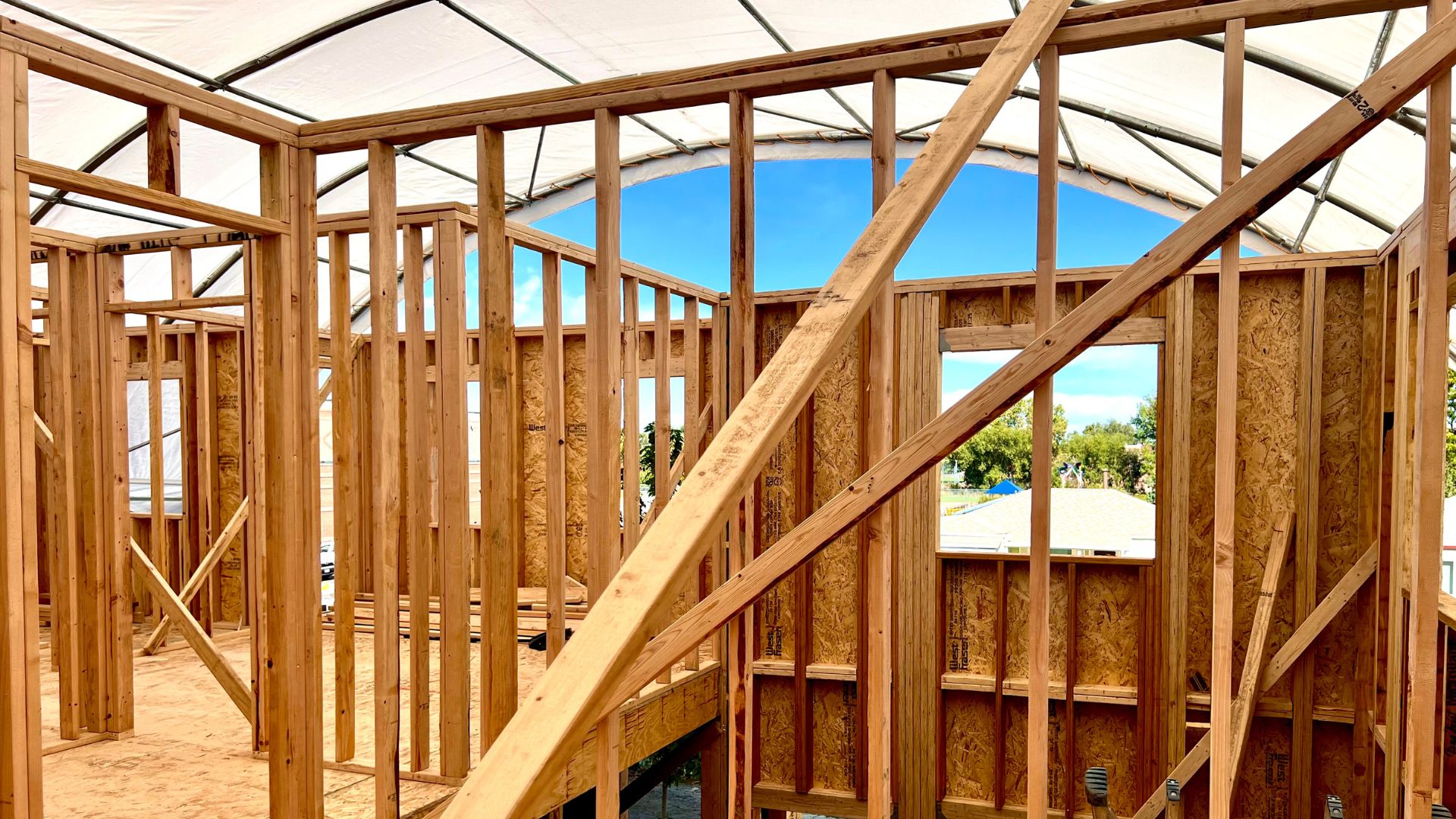
Inside a home addition during framing with Sustainable Design Build.
A home addition consultation should help homeowners understand more than just pricing. The best consultations provide insight into a contractor’s experience, planning process, communication systems, design capabilities, and project management approach. Asking the right questions early can help homeowners avoid costly surprises and choose a team capable of successfully guiding their project from concept through completion.
Every week, homeowners sit down with our team because they have reached a crossroads with their home. Some need more space for a growing family. Others love their neighborhood but have outgrown their floor plan. Some have spent years imagining a larger kitchen, a new primary suite, or an addition that finally makes their home function the way they always wanted.
What many homeowners discover during that first meeting is that a successful home addition has far less to do with construction than they initially expected.
The reality is that most major challenges are either solved or created long before construction begins. Decisions made during planning, budgeting, design development, permitting, and project coordination often have a greater impact on the outcome than the construction itself. That is why the consultation process matters.
Over the years, we’ve found that the homeowners who have the best experience are not necessarily the ones who ask about price first. They are the ones who ask thoughtful questions about process, communication, accountability, budgeting, and what happens when unexpected challenges arise. Those conversations create clarity, establish expectations, and help homeowners understand exactly what they are signing up for before a project begins.
Whether this is your first renovation or you’ve completed construction projects before, the questions below can help you evaluate not only the contractor you’re meeting with, but also the systems, experience, and planning process that will ultimately determine the success of your home addition.
Why the Consultation Process Matters
A home addition is one of the largest investments many homeowners will make in their property. Whether expanding a kitchen, creating a primary suite, adding a second story, or building additional living space for a growing family, success begins long before construction starts.
Unfortunately, many homeowners focus primarily on price during consultations. While budget is important, experienced homeowners and industry professionals understand that the planning process often determines whether a project remains on schedule, stays within budget, and delivers the desired outcome.
At Sustainable Design Build, consultations are designed to help homeowners understand the complete project journey, from initial design concepts and budgeting through permitting, construction, and final completion. The goal is to create clarity, identify potential challenges early, and establish realistic expectations before any work begins.
For homeowners considering a home addition, the following questions can provide valuable insight into whether a contractor has the experience, systems, and processes necessary to deliver a successful project.
Some great questions you can Sustainable Design Build, as well as other builders when doing your due diligence in hiring for you Home Addition project are:
Does Sustainable Design Build Handle Design and Permitting In-House?
Yes. Sustainable Design Build operates under a design-build model, which means homeowners work with a single team throughout the planning, design, permitting, and construction phases of their project.
Rather than hiring separate architects, designers, engineers, and contractors, homeowners benefit from a coordinated process where design and construction professionals collaborate from the beginning. This approach helps ensure that design concepts align with construction feasibility, project goals, and budget expectations before work begins.
SDB’s team manages the design development process and coordinates permit submissions with the appropriate local jurisdictions. This reduces the burden on homeowners, who would otherwise be responsible for managing multiple consultants and navigating permitting requirements independently.
One of the primary advantages of the design-build approach is accountability. Homeowners have a single point of contact and a single team responsible for guiding the project from concept through completion, helping streamline communication and reduce delays caused by fragmented project management.
Will I Have a Dedicated Project Manager with Sustainable Design Build?
Yes. Sustainable Design Build assigns a dedicated project manager to oversee your project throughout construction.
One of the most common concerns homeowners have during a remodel or home addition is knowing who to contact when questions arise. A dedicated project manager serves as the primary point of communication, helping ensure that information flows efficiently between homeowners, trade partners, suppliers, and the construction team.
Your project manager is responsible for coordinating schedules, managing trade partners, monitoring progress, communicating important updates, and helping address questions or concerns throughout the build.
In addition to direct communication, homeowners have access to project management software that provides visibility into schedules, selections, project documentation, progress updates, and daily logs. This transparency helps homeowners stay informed and engaged throughout the construction process while reducing uncertainty about what is happening on-site.
How Does Sustainable Design Build Manage Change Orders and Budget Overruns?
At Sustainable Design Build, minimizing unexpected costs begins long before construction starts.
The pre-construction process is designed to identify project requirements, refine scope, develop construction documents, and establish realistic budgets before work begins. Thorough planning often reduces the likelihood of costly surprises later in the project.
However, because remodeling and additions involve existing homes, unforeseen conditions can occasionally be discovered during construction. Hidden structural issues, outdated electrical systems, concealed plumbing problems, or previously unpermitted work are examples of conditions that may not become visible until demolition begins.
When changes are required, SDB utilizes a formal change order process. Homeowners receive documentation outlining the scope of the change, associated costs, and any schedule impacts before additional work proceeds. This ensures transparency and allows homeowners to make informed decisions regarding modifications to their project.
Budget transparency and communication remain priorities throughout construction. Rather than presenting unexpected invoices after work is completed, changes are discussed, documented, and approved so homeowners understand how decisions may affect both project cost and timeline. This structured approach helps maintain trust and keeps homeowners informed throughout the construction process.
Learn more about SDB’s home addition services here:
What Experience Do You Have With Home Additions Similar to Mine?
One of the first questions homeowners should ask during a consultation is whether the contractor has completed projects similar in size and complexity.
Not all contractors specialize in additions. Integrating new construction into an existing structure requires a unique understanding of structural systems, architectural continuity, zoning regulations, permitting requirements, and occupied-home construction.
Important questions include:
- Have you completed projects similar to mine?
- Can you provide examples of comparable additions?
- What challenges commonly arise with this type of project?
- How do you address those challenges?
Experienced contractors should be able to discuss previous projects, explain common obstacles, and demonstrate how their experience helps avoid costly mistakes.
What Is Your Design-Build Process?
This is one of the most important questions homeowners can ask.
Many construction companies operate under a traditional model where homeowners hire separate architects, designers, engineers, and contractors. While this approach can work, it often creates communication gaps and accountability challenges.
Homeowners should ask:
- Do you provide design services?
- How are design and construction coordinated?
- Who manages communication throughout the project?
- Who is ultimately responsible for the project’s success?
At Sustainable Design Build, projects follow an integrated design-build process that brings planning, design, budgeting, permitting, and construction under one coordinated team. This approach creates a single point of responsibility throughout the project lifecycle and helps ensure that design decisions align with construction realities and budget expectations.
Homeowners can learn more about SDB’s structured design-build approach by reviewing the company’s detailed process here:
By involving designers, project managers, and construction professionals early in the planning phase, homeowners often gain better budget predictability, improved communication, and fewer surprises during construction.
How Will You Determine My Project Budget?
Budget conversations should go far beyond a rough estimate.
Experienced contractors understand that homeowners need transparency regarding pricing assumptions, project scope, and potential variables that may affect overall investment.
Important questions include:
- What is included in the estimate?
- What factors could affect final pricing?
- How are change orders managed?
- Should I maintain a contingency budget?
A knowledgeable contractor should explain how budgets are developed and identify factors that could influence costs throughout the project.
The goal is not simply providing a number. It is helping homeowners understand where that number comes from and what it includes.
Will My Addition Require Permits and Inspections?
Permitting is often one of the most overlooked aspects of home additions.
Depending on the project’s scope and location, approvals may include zoning reviews, structural evaluations, building permits, electrical inspections, plumbing inspections, and energy code compliance reviews.
Homeowners should ask:
- Who obtains permits?
- How long does permitting typically take?
- Are there zoning restrictions that affect my property?
- What inspections will be required?
An experienced contractor should be able to guide homeowners through the permitting process and identify potential regulatory challenges before construction begins.
Who Will Manage My Project Day to Day?
Many homeowners assume the person conducting the consultation will remain involved throughout construction. That is not always the case.
Understanding who will oversee daily operations is critical.
Questions to ask include:
- Will I have a dedicated project manager?
- How frequently will updates be provided?
- Who should I contact with questions?
- How are project decisions communicated?
Strong project management often separates exceptional construction experiences from frustrating ones.
How Will I Track Progress Throughout My Home Addition?
Modern homeowners expect transparency throughout the construction process.
During consultations, homeowners should ask:
- Will I have access to project schedules?
- How are updates communicated?
- Can I review budget information during construction?
- Will I receive progress reports and photos?
At Sustainable Design Build, uses industry-leading platform, Buildertrend, to allow clients to have real-time updates about their construction progress. This project management system helps homeowners stay informed throughout construction by providing visibility into schedules, progress updates, project communication, and construction milestones. Clients will have the additional benefit of seeing project photos and videos from daily logs about their homes’ various phases of construction.
But much like construction, our project management has a tangible side as well. Your assigned project manager will discuss with you every week the current progress of your project and status of any action items you are facing.
This level of transparency helps eliminate uncertainty and allows homeowners to remain engaged throughout the process without constantly requesting updates.
How Long Will My Home Addition Take?
Every project is unique, but experienced contractors should provide realistic expectations regarding scheduling.
Questions homeowners should ask include:
- What is the anticipated construction timeline?
- What factors commonly cause delays?
- How are schedule changes communicated?
- What project milestones should I expect?
Experienced contractors understand that timelines depend on permitting, material lead times, weather conditions, and unforeseen site conditions. Honest conversations about scheduling create more realistic expectations from the beginning.
How Do You Handle Unexpected Issues During Construction?
Every existing home contains unknown variables.
Hidden plumbing issues, outdated electrical systems, structural deficiencies, and unforeseen site conditions can emerge after construction begins.
Rather than asking if problems occur, homeowners should ask:
- How are unforeseen conditions identified?
- How are solutions developed?
- How are pricing adjustments communicated?
- What is your change order process?
A contractor’s answer often reveals the quality of their systems, communication practices, and project management capabilities.
Why Does a Single Point of Responsibility Matter?
One of the biggest advantages of the design-build model is accountability.
When homeowners hire separate architects, engineers, designers, and contractors, communication can become fragmented. Delays, misunderstandings, and conflicting recommendations often follow.
By contrast, a design-build team creates a single point of responsibility from initial planning through final construction.
During consultations, homeowners should ask:
- Who coordinates the entire project?
- How are design decisions reviewed against budget?
- Who is responsible for project outcomes?
This integrated approach often results in improved communication, stronger accountability, and a more streamlined experience for homeowners.
Frequently Asked Questions About Home Addition Consultations
How many contractors should I meet with before choosing one?
Most homeowners benefit from meeting with at least two or three qualified contractors to compare experience, communication styles, and project approaches.
Should I have a budget before my consultation?
Yes. Establishing an investment range helps contractors recommend appropriate design solutions and provide more realistic guidance.
Can a contractor help with design and planning?
Many design-build firms provide both design and construction services, creating better coordination between planning, budgeting, and execution.
How do design-build firms differ from traditional contractors?
Traditional construction often separates design, architecture, engineering, and construction into multiple contracts. Design-build firms integrate these services under one team, creating a more collaborative and accountable process from start to finish.
What are the biggest red flags during a consultation?
Vague pricing, unclear timelines, poor communication, lack of permitting knowledge, and an inability to explain project management procedures are common warning signs.
How early should I start planning a home addition?
Most homeowners should begin consultations several months before their desired construction start date to allow adequate time for design development, budgeting, permitting, and scheduling.
Why is project management so important for home additions?
Project management helps coordinate schedules, budgets, communication, trade partners, permits, inspections, and construction milestones. Strong project management often has a direct impact on project success.
Connect With Us
Planning your next renovation, or maybe you are looking to do a complete remodel for your home? Whatever the task, it can’t hurt to ask. Reach out to our team through this form.
We can schedule a free consultation and discuss everything you need to get your project moving in the right direction. Did we mention, it’s absolutely free?