
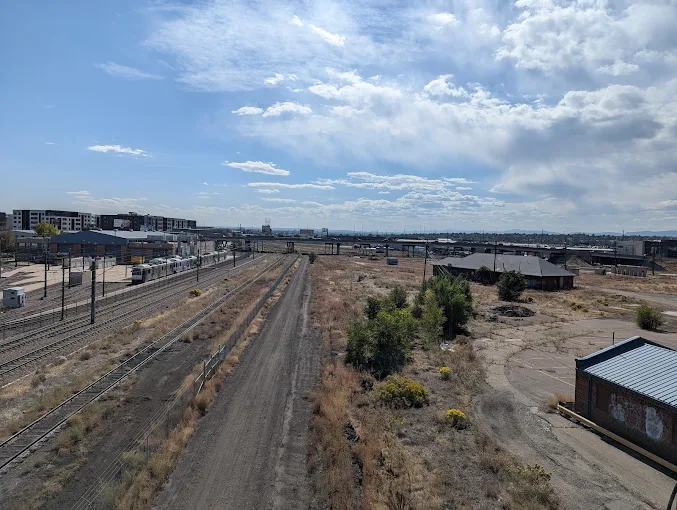
Photo of proposed future site of the New Broncos Stadium in the Burnham Yards property.
Denver’s proposed Broncos stadium district at Burnham Yard reflects a broader shift toward mixed-use, transit-oriented development. As large-scale projects reshape urban corridors, nearby residential neighborhoods often experience increased demand for thoughtful home renovations, additions, and accessory dwelling units that align with evolving community dynamics.
A New Chapter for Burnham Yard and Central Denver
Plans for a new Denver Broncos stadium district at Burnham Yard represent more than a sports venue expansion. According to reporting from BusinessDen (Gounley, 2026), the project is expected to unfold in three phases and ultimately include between five and seven million square feet of mixed-use development. This will likely encompass residential housing, office space, retail, and entertainment, all anchored by a stadium with a retractable roof.
The transformation of Burnham Yard, a historic rail site in operation for nearly 150 years, reflects a growing trend in urban redevelopment. Cities across the United States are increasingly repurposing industrial land into vibrant, walkable districts that blend infrastructure, housing, and commerce (Urban Land Institute, 2023). Denver’s approach aligns with this national movement, particularly in its emphasis on transit access via the nearby 10th and Osage light rail station.
Rather than developing the entire district at once, the phased strategy allows the area to evolve over time. Early infrastructure improvements will support the stadium itself, while future phases will determine how residential and commercial uses are distributed. This flexible model reflects modern planning practices that adapt to market demand and long-term growth patterns.
Mixed-Use Development and Its Ripple Effect on Neighborhoods
Large-scale projects like the Burnham Yard redevelopment rarely operate in isolation. As new districts emerge, surrounding neighborhoods often experience increased attention from homeowners, investors, and city planners. Proximity to entertainment hubs, transit corridors, and employment centers tends to raise both property values and expectations for housing quality (National Association of Realtors, 2024).
In Denver, this pattern has already been observed in areas such as RiNo and LoDo, where industrial zones transitioned into high-demand residential and mixed-use communities. The proposed stadium district may create similar momentum in adjacent neighborhoods, particularly along key corridors like Eighth Avenue, described as a “front door” to the development (Gounley, 2026).
As these areas evolve, homeowners often begin rethinking how their spaces function. Increased density, changing lifestyles, and rising property values can influence decisions around expanding living areas, modernizing interiors, or creating additional income-generating units.
The Growing Role of Thoughtful Residential Design
As urban districts expand, residential design becomes an essential part of maintaining neighborhood character while accommodating growth. Homeowners near emerging developments often seek ways to enhance livability without relocating, especially in markets where inventory is limited.
This is where strategic home improvements become particularly relevant. Projects such as home additions, interior remodels, and ADU construction in Denver can help properties adapt to changing demands. These updates allow homeowners to maximize existing space, support multigenerational living, or create rental opportunities in areas experiencing increased demand.
Importantly, the shift is not only about expansion but also about integration. As neighborhoods transition, there is often a desire to balance modern functionality with the architectural identity that defines Denver’s established communities. Thoughtful design and construction play a key role in achieving that balance.
Infrastructure, Access, and Lifestyle Shifts
The Burnham Yard project highlights another critical factor in urban development: infrastructure. Roads, transit access, and pedestrian connectivity are foundational elements of the first phase, expected to be completed by 2031 (Gounley, 2026). These improvements do more than support stadium traffic. They reshape how residents move through and experience the city.
Transit-oriented development has been shown to reduce reliance on cars, increase walkability, and support more sustainable urban living patterns (U.S. Department of Transportation, 2022). As access improves, neighborhoods near transit hubs often become more attractive to a broader range of residents.
For homeowners, this can translate into a shift in how spaces are used. Homes may need to accommodate remote work, flexible living arrangements, or increased time spent within walkable communities. Renovations that prioritize layout efficiency, natural light, and indoor-outdoor connections often become more desirable in these evolving environments.
Preserving History While Building Forward
One of the more notable aspects of the Burnham Yard redevelopment is its emphasis on preserving historical elements, including a locomotive shop and rail yard turntable. Integrating these features into a modern entertainment district reflects a broader design philosophy that values both heritage and innovation.
This same principle applies at the residential level. Many Denver homes, particularly in established neighborhoods, carry architectural significance that homeowners wish to preserve. Renovation projects increasingly focus on maintaining original character while upgrading functionality, creating spaces that feel both timeless and contemporary.
Balancing preservation with modernization requires a careful approach. It involves understanding existing structures, respecting historical context, and introducing updates that enhance rather than overshadow the home’s original design.
What This Means for Denver Homeowners
The development of the Broncos stadium district is a clear indicator of Denver’s continued growth and transformation. While the project itself centers on a specific location, its influence will likely extend into surrounding neighborhoods over time.
For homeowners, this presents both opportunities and considerations. Rising demand may increase property value, but it can also shift expectations around design, functionality, and long-term usability. Investing in well-planned home improvements can help properties remain competitive and aligned with the direction of the local market.
As Denver continues to evolve, the connection between large-scale urban development and residential design will only become more pronounced. Projects like Burnham Yard are not just reshaping skylines. They are influencing how people live, build, and adapt within the city.
References
Gounley, T. (2026, March 12). Broncos plan three phases of stadium development, team attorney says. BusinessDen.
National Association of Realtors. (2024). Impact of mixed-use development on housing markets. https://www.nar.realtor
Urban Land Institute. (2023). Trends in mixed-use and adaptive reuse development. https://www.uli.org
U.S. Department of Transportation. (2022). Transit-oriented development and urban mobility. https://www.transportation.gov
Connect With Us
Planning your next renovation, or maybe you are looking to do a complete remodel for your home? Whatever the task, it can’t hurt to ask. Reach out to our team through this form.
We can schedule a free consultation and discuss everything you need to get your project moving in the right direction. Did we mention, it’s absolutely free?