
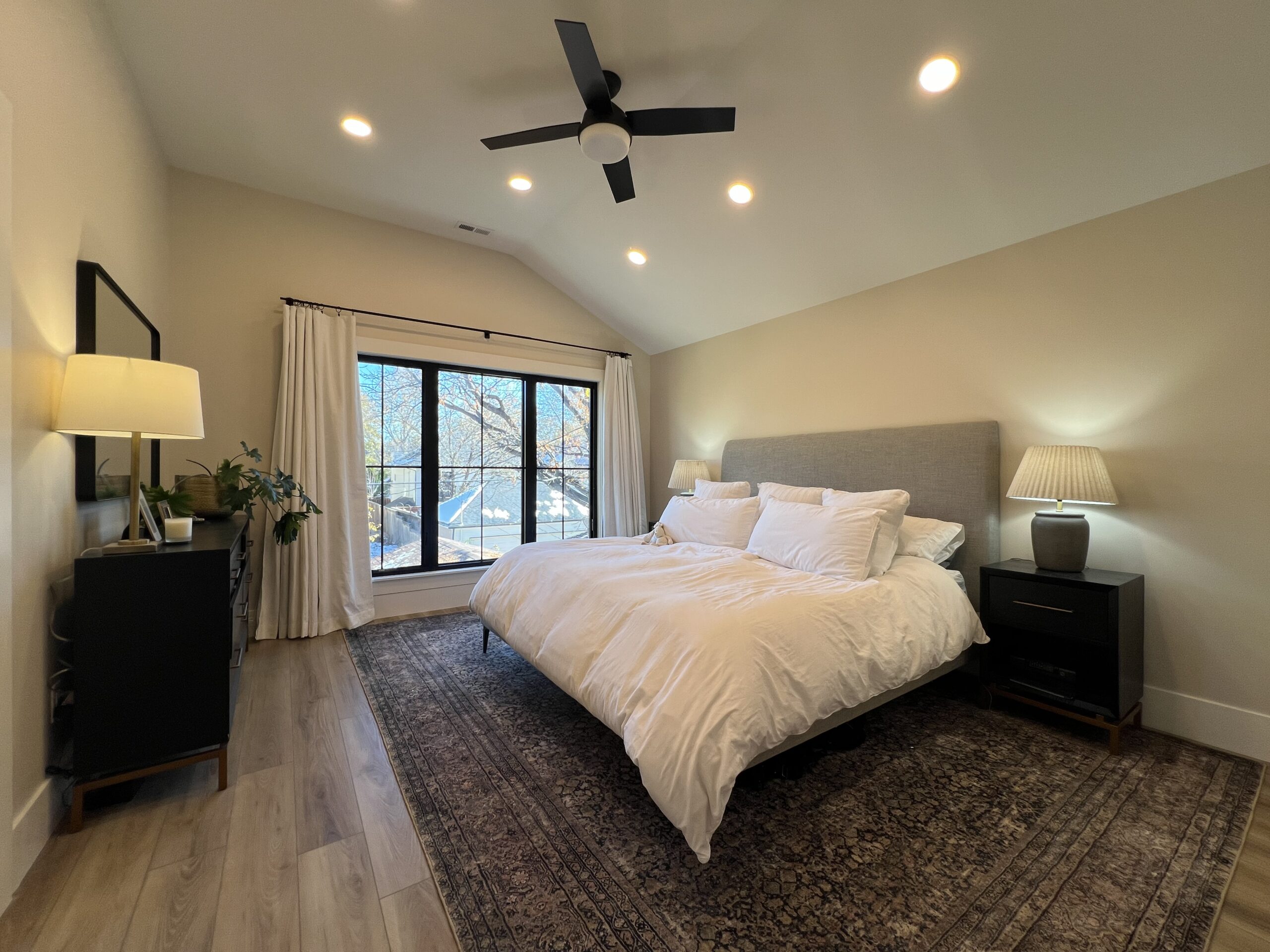
Maternity support at home can include the family, friends, living spaces, and everyday routines that help make pregnancy, welcoming a new baby, and adjusting to life as a growing family a little easier. For expecting and new mothers, a strong support system might mean having someone nearby to prepare a meal, spend time with an older child, help around the house, run an errand, or simply provide some welcome company. Preparing for a baby naturally involves thinking about everything the baby will need, but it can also be a good opportunity to consider what Mom will need and whether the home and family surrounding her are ready for this next stage of life.
This article discusses maternity and family support from a lifestyle and home-planning perspective. It is not medical advice or a substitute for guidance from a healthcare provider.
What Does Maternity Support Look Like at Home?
Preparing for a baby has a funny way of making the smallest details suddenly feel very important. There are cribs to compare, car seats to install, names to consider, nurseries to arrange, and an impressive number of tiny clothes that somehow need their own organizational system.
With so much attention naturally focused on the baby, it can be easy to overlook another person going through a significant transition: Mom.
Maternity support doesn’t necessarily need to be formal or complicated. Often, it comes down to having people around who can make ordinary life a little more manageable during pregnancy and after the baby comes home. A partner might take on more around the house, grandparents might bring dinner, a sibling could spend an afternoon with an older child, or a friend might stop by with groceries and stay for a cup of coffee.
For an expecting mother, thinking about that support ahead of time can be just as worthwhile as preparing the nursery. In fact, the American College of Obstetricians and Gynecologists recommends discussing postpartum support during pregnancy, including identifying family and friends who may be able to provide social and practical support after a baby arrives.
Rather than only asking what else needs to be purchased before the baby comes home, families can start thinking about the people they trust, who will realistically be available, and how easy it will be to lean on them when the time comes.
How Can You Build a Support System Before Having a Baby?
Family support often develops naturally, but proximity and everyday logistics still play a surprisingly large role in how accessible that support actually is.
Parents who live nearby may be able to stop over for dinner or spend an afternoon with their grandchild without much planning. A sibling in the neighborhood might be available when something unexpected comes up. Friends who live close enough may be able to visit without every get-together becoming an event that needs to be arranged a week ahead of time.
That becomes more difficult when the people closest to you live across town or several hours away.
There isn’t necessarily a right amount of family involvement, either. Some new parents want a busy home filled with grandparents and relatives, while others value having plenty of quiet time to themselves. A good support system respects both needs by making help available without making it feel intrusive.
As families prepare for a baby, it can be useful to talk about these expectations beforehand. Who would you feel comfortable calling when you need a hand? Who genuinely has the time and flexibility to help? How involved do you want grandparents or other relatives to be? These conversations can make the transition into parenthood feel a little less like everyone is figuring things out as they go.
How Can Family Support a New Mother?
Some of the most meaningful support for a new mother can come from very ordinary gestures.
A family member might make dinner, walk the dog, take an older child to the park, pick up groceries, or take care of a few household chores. Other times, support may simply mean having another trusted adult nearby for conversation and company during a period when daily routines can look very different from what they did before.
The goal isn’t to surround a mother with people at every moment. Privacy and personal space can become particularly valuable when a family is settling into new routines. Instead, it is about creating a comfortable balance where help is available without turning that help into another obligation.
That balance is different for every family, which is why proximity can be so valuable. When family members live close enough that visiting doesn’t require extensive planning, support can become part of everyday life rather than something reserved for particularly difficult days.
Why Does Living Close to Family Matter When Starting a Family?
Before having children, living 30 or 45 minutes away from parents or siblings may not feel particularly far. You meet for dinner, visit on weekends, and make the drive without thinking much about it.
A growing family can change the equation.
Leaving the house with a baby often involves more planning, more belongings, and a schedule that doesn’t always cooperate. What used to be a casual drive across town can become something that needs to be coordinated around naps, meals, work schedules, and everything else happening that day.
When grandparents or other relatives live nearby, family relationships can become more spontaneous. A grandparent can visit for an afternoon, an aunt or uncle can spend time with an older child, or everyone can have dinner together without turning it into a carefully planned occasion.
Over time, that proximity can also create a different relationship between children and their extended family. Grandparents aren’t limited to birthdays, holidays, and planned visits. They can become part of the smaller, ordinary moments that ultimately make up family life.
How Can Your Home Better Support a Growing Family?
Sometimes a family’s needs change faster than its house does. A home that felt spacious and comfortable for two adults can feel very different once it begins accommodating a baby, another child, visiting grandparents, toys, strollers, additional storage, and more people moving through the home.
That doesn’t necessarily mean a family needs to move.
Sometimes the solution is relatively simple, such as reorganizing existing rooms or finding better ways to use storage. Other families begin thinking about another bedroom, a larger kitchen, a more comfortable gathering space, or a dedicated place where grandparents can stay when they visit.
For homeowners whose needs have changed more substantially, home remodeling with Sustainable Design Build can offer an opportunity to reconsider how the existing house functions rather than simply adding more space for the sake of having it.
The more useful question is often how the home can better support the family that will be living there five or ten years from now. When approached that way, remodeling becomes less about square footage and more about creating a home that can comfortably evolve alongside the people living in it.
Should You Create Space for Grandparents When Having a Baby?
For families with close relationships, grandparents often become part of the conversation about what life after the baby arrives might look like.
A guest bedroom may be perfectly adequate for occasional visits, particularly when grandparents live relatively nearby. When parents live farther away or families expect them to spend considerably more time together, however, a dedicated guest space can become much more valuable.
There is also a point where visiting and living together begin to overlap. Sharing a home with parents or in-laws can be a wonderful arrangement for some families, but it also means combining two established households under one roof. Kitchens, bathrooms, entrances, schedules, privacy, and daily routines all become shared to some degree.
For families interested in multigenerational living, this is where the layout of the home and property becomes particularly important. Being close to one another doesn’t necessarily have to mean occupying the same living space.
Can an ADU Help Keep Family Close?
An accessory dwelling unit offers one way for families to live close together while maintaining separate homes. For grandparents, parents, or other relatives, an ADU can provide a private kitchen, bathroom, bedroom, living area, and entrance while keeping the main family home only a short walk away.
For a growing family, that arrangement can offer an appealing balance between connection and independence. Grandparents can maintain their own routines and have a home that feels genuinely theirs, while their children and grandchildren remain close enough for everyday visits and spontaneous time together.
This can be particularly meaningful during the years when a family is growing. Having grandparents nearby might make it easier to share dinners, help with an older child, spend time with the baby, or simply be present in ways that become much harder when every visit requires a drive across Denver.
Sustainable Design Build explored this relationship between housing and family support more closely in Building an ADU for Family: Creating a Support System for New Mothers and Growing Families. The idea behind the article isn’t simply adding another structure to a property, but considering how independent housing for parents or grandparents could bring a family’s support network closer while allowing everyone to maintain their own space.
An ADU certainly isn’t necessary for having a strong family support system, nor will it be the right solution for every property. For families already considering bringing parents or grandparents closer, however, it can provide a way to do so without asking either household to give up all of its independence.
What Should a Family-Friendly ADU Include?
An ADU intended for a parent or grandparent should feel like a home rather than an elaborate guest room. The specific layout will depend on the property and the people who will live there, but comfortable everyday spaces tend to matter more than adding unnecessary complexity.
A kitchen and bathroom, a comfortable bedroom, useful storage, laundry, natural light, and an inviting living area can all contribute to making a smaller residence feel complete. If parents or grandparents expect to remain there for many years, families may also want to think about how easily the space can continue serving them as their needs change.
SDB’s Complete Guide to Building an ADU in Denver goes deeper into the practical side of planning an ADU, including architectural design, zoning, permitting, interior design, utilities, and construction.
Thinking through those details early can help an ADU become more than additional square footage in the backyard. Ideally, it becomes a comfortable home that feels connected to the rest of the property while still providing the privacy someone expects from having a place of their own.
What If an ADU Isn’t Right for Your Family?
Every family approaches these questions differently, and an ADU is only one possible solution.
Some homeowners may simply need another bedroom or a more useful guest suite. Others may want a larger kitchen where grandparents and children can comfortably gather. A family that plans to remain in its home for many years may decide that the existing floor plan needs to change more substantially.
A whole-home remodel can reorganize existing space around those changing priorities, while a Denver home addition can provide additional room without requiring a family to leave the house or neighborhood where they have already established roots.
Working through those options with a Denver Design-Build contractor can also help homeowners consider the property as a whole. Instead of beginning with the assumption that an addition, remodel, or ADU is automatically the answer, the design process can begin with how the family wants to live and work backward toward the space required to support it.
Preparing Your Home for the Family You’re Becoming
There is already an enormous amount to think about when preparing for motherhood. Between getting ready for the baby, making decisions about work and childcare, coordinating with family, and simply enjoying the anticipation of welcoming someone new into the family, the home itself can sometimes become another item on a very long list.
It doesn’t necessarily need to be.
Preparing a home for a growing family can begin with something much simpler: thinking about the people you want around you and how you imagine everyday family life unfolding. Maybe that means grandparents coming over for Sunday dinner, children growing up with cousins nearby, or having someone you trust close enough to stop by without planning days in advance.
For some families, their existing home already supports that life beautifully. For others, the transition into parenthood reveals opportunities to make the home more comfortable, create additional room, or bring extended family closer.
At Sustainable Design Build, those changing family needs are part of how we think about residential design. Through ADUs, home additions, whole-home remodeling, and custom home construction throughout the Denver area, our team works with homeowners to create spaces that reflect not only how they live today, but how they expect their family to grow and change over time.
A home cannot create a support system on its own, but it can make it considerably easier for the people who matter most to remain a meaningful part of everyday family life.
Connect With Us
Planning your next renovation, or maybe you are looking to do a complete remodel for your home? Whatever the task, it can’t hurt to ask. Reach out to our team through this form.
We can schedule a free consultation and discuss everything you need to get your project moving in the right direction. Did we mention, it’s absolutely free?