
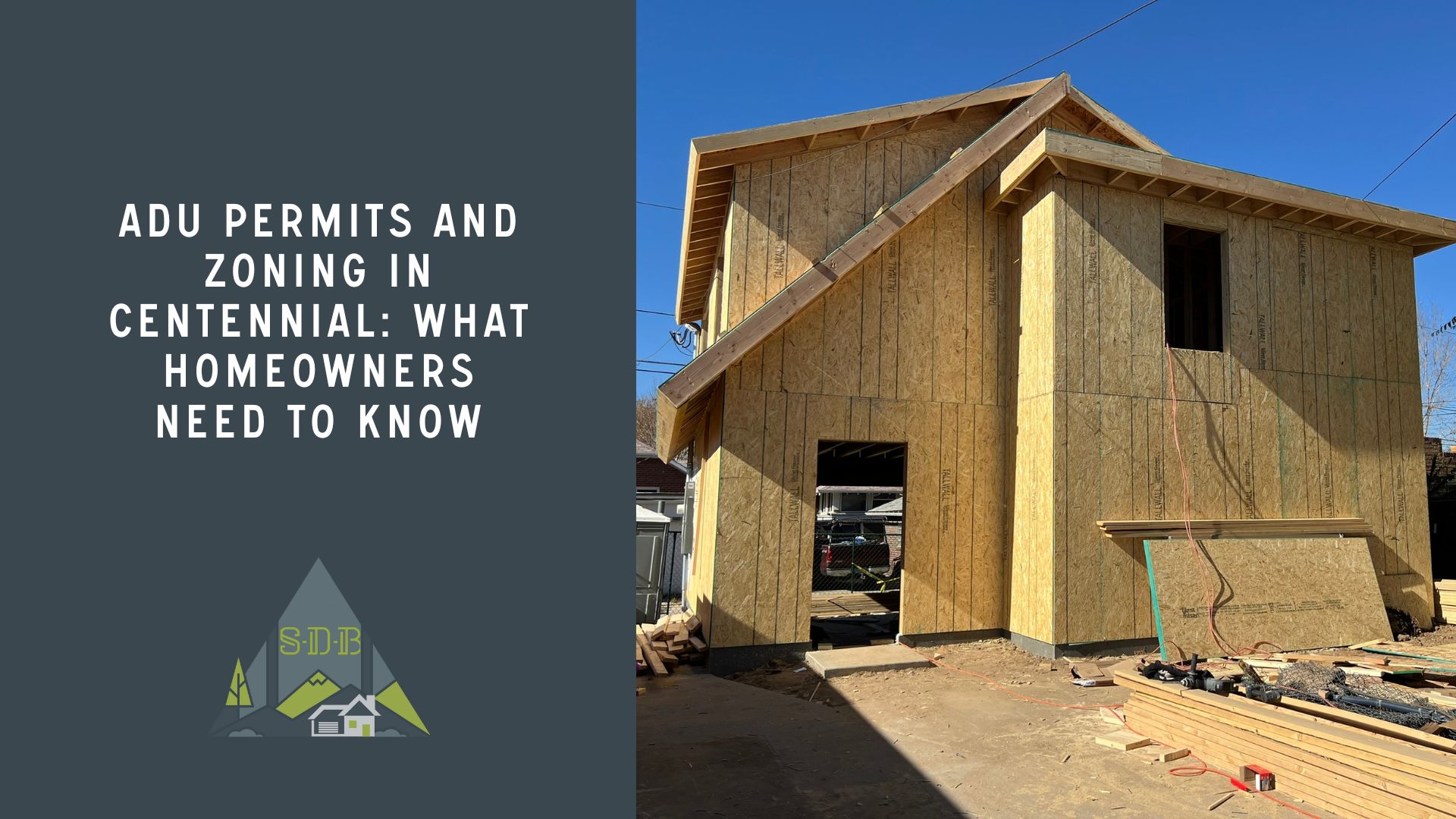
Accessory Dwelling Units (ADUs) in Centennial require careful review of zoning regulations, lot eligibility, and permitting standards set by the City of Centennial and Arapahoe County. Homeowners must verify whether ADUs are allowed in their zoning district, understand size and setback limits, and comply with occupancy and rental rules. Working with an experienced design-build contractor helps ensure compliance and a smoother approval process.
ADU Permits and Zoning in Centennial: What Homeowners Need to Know
As housing needs shift across the south Denver metro area, Accessory Dwelling Units (ADUs) in Centennial are gaining attention as a flexible way to add living space, support multigenerational households, or create long-term rental opportunities. While ADUs are permitted in certain circumstances, Centennial has specific zoning and permitting requirements that homeowners must understand before moving forward.
For those considering ADU construction in Centennial, early clarity around local regulations helps avoid delays, redesigns, and unexpected limitations. Sustainable Design Build assists homeowners with feasibility analysis, zoning interpretation, and coordinated project planning from concept through construction.
ADU Permits Are Required in Centennial
All ADU projects in Centennial require building permits, whether the unit is detached, attached, or created within an existing home. Permit applications typically involve architectural drawings, site plans, and coordination with city reviewers. According to the City of Centennial building permit guidelines, any project involving structural work, plumbing, or electrical systems must be formally reviewed and approved before construction begins (City of Centennial Building Division).
Submitting accurate, code-compliant documentation helps keep the review process efficient.
Zoning Determines Whether ADUs Are Allowed
Not all Centennial properties allow ADUs. Eligibility depends on the property’s zoning designation and whether accessory units are permitted as a use within that district. Homeowners can review zoning classifications and development standards using the Centennial Development Code and zoning maps (City of Centennial Development Code).
Zoning regulations influence ADU size, placement, height, and whether the unit must be internal or detached.
Rezoning and Special Approvals
If a property is not currently zoned to allow an ADU, homeowners may explore rezoning or special approval processes. These requests typically involve public notice, planning review, and city approval, and timelines can extend several months. The City of Centennial planning department outlines rezoning and land use procedures for residential properties (City of Centennial Planning).
Early evaluation helps determine whether rezoning is a viable option for a specific lot.
Key Zoning Restrictions Affecting ADUs
Centennial zoning regulations establish limits on ADU square footage, building height, lot coverage, and setbacks. Owner-occupancy requirements may apply, requiring the property owner to live in either the primary residence or the ADU. These standards are designed to balance housing flexibility with neighborhood compatibility, as outlined in the Centennial municipal code (Centennial Code of Ordinances).
Interpreting how these requirements apply to a specific site is critical before design work begins.
Detached vs. Internal ADUs
Detached ADUs are separate structures, often located in rear yards or converted garages, while internal ADUs are created within an existing home, such as a basement apartment. Each option comes with different code considerations related to fire separation, access, and utilities. The American Planning Association notes that internal ADUs can sometimes face fewer visual impact concerns depending on local regulations (American Planning Association ADU Resources).
Choosing the right ADU type depends on zoning allowances, lot size, and homeowner goals.
HOA Considerations in Centennial
Many Centennial neighborhoods are governed by homeowners associations. Even when city zoning permits ADUs, HOA covenants may restrict or prohibit them. Reviewing HOA rules early helps avoid conflicts during design or permitting. Guidance on HOA authority and homeowner rights is available through the Colorado HOA Information Center (Colorado HOA Information Center).
ADU Permitting Timelines in Centennial
Permitting timelines vary depending on project complexity and review volume. Zoning verification and design development typically occur first, followed by city review that may take several weeks to months. The Centennial development review process emphasizes complete submissions to reduce delays and resubmittals (City of Centennial Development Review).
Inspections and Code Compliance
ADUs in Centennial must pass required inspections throughout construction, including foundation, framing, electrical, plumbing, insulation, and final approval. Basement ADUs must also comply with egress and radon mitigation standards under Colorado health and building regulations (Colorado Department of Public Health and Environment).
Renting an ADU in Centennial
ADUs in Centennial may be rented, subject to local occupancy rules and licensing requirements. Long-term rentals are generally permitted, while short-term rentals may require additional approvals depending on use and duration. Homeowners should review local rental and licensing requirements before planning to lease an ADU (City of Centennial Licensing).
Building ADUs With Confidence in Centennial
Zoning and permitting are often the most complex aspects of ADU projects, but with proper planning, they can be navigated successfully. By addressing regulations early and coordinating design with local standards, homeowners can move forward confidently. Sustainable Design Build supports Centennial homeowners through zoning analysis, design coordination, permitting, and construction to ensure ADUs are built legally, efficiently, and with long-term value in mind.
For more information about Accessory Dwelling Unit construction in Centennial, explore Sustainable Design Build’s ADU services and learn how thoughtful planning leads to successful projects.
Connect With Us
Planning your next renovation, or maybe you are looking to do a complete remodel for your home? Whatever the task, it can’t hurt to ask. Reach out to our team through this form.
We can schedule a free consultation and discuss everything you need to get your project moving in the right direction. Did we mention, it’s absolutely free?