
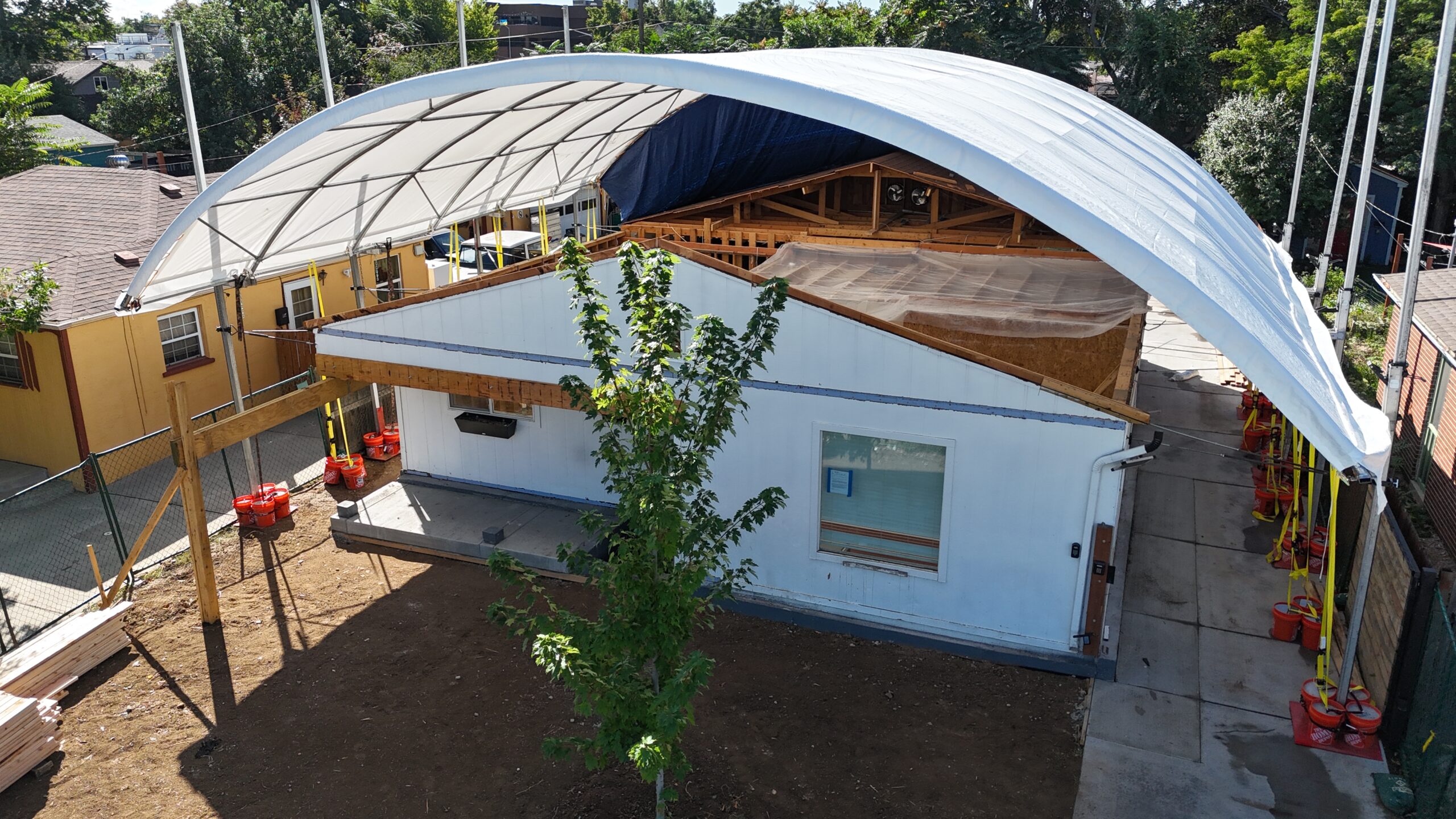
A home addition is often the best solution for Denver homeowners who need more living space but want to remain in the neighborhood they love. Whether you’re planning a kitchen expansion, family room addition, primary suite, second-story pop top, or a complete whole-home transformation, a professionally designed addition allows your home to evolve alongside your family’s needs without the cost and disruption of moving. The most successful home additions begin with thoughtful planning, realistic budgeting, architectural design, permitting, and construction working together through an integrated Design-Build process.
As Denver’s neighborhoods continue to mature and housing inventory remains competitive, many homeowners are choosing to invest in the homes they already own. Expanding an existing residence often provides greater long-term value than relocating, especially when the addition is designed to improve both daily living and overall property value. At Sustainable Design Build, our in-house architect, interior designer, estimators, and construction professionals collaborate from the beginning of every project, helping homeowners create additions that feel like they were always part of the original home.
Why More Denver Homeowners Are Expanding Instead of Moving
For decades, the typical answer to running out of space was simple: buy a bigger house.
Today’s housing market has changed that equation.
Many homeowners have secured favorable mortgage rates, invested years into improving their property, built relationships within their neighborhood, and established routines around schools, parks, local businesses, and nearby family. Moving doesn’t simply mean purchasing another home. It often means giving up a location that has become part of your lifestyle.
Across neighborhoods like Washington Park, Berkeley, Park Hill, Congress Park, Bonnie Brae, Platt Park, Sloan’s Lake, Hilltop, University Park, and many other established communities throughout the Denver metro area, homeowners are increasingly asking a different question:
“Can we make this home work better instead?”
More often than not, the answer is yes.
A thoughtfully planned home addition allows you to preserve everything you already love about your property while solving the challenges that have emerged over time. Rather than compromising on location, homeowners can invest directly into creating a house that better reflects how they actually live.
Some families need another bedroom for growing children. Others have transitioned to permanent remote work and need dedicated office space. Empty nesters may be preparing for aging in place by creating a larger primary suite on the main level, while multigenerational households often require additional bedrooms, bathrooms, or private living areas.
Every family’s goals are different, but they all begin with the same realization:
The home hasn’t stopped being valuable.
It has simply stopped fitting the way life has changed.
Home Additions Are About More Than Square Footage
One of the biggest misconceptions homeowners have is believing a home addition is simply about adding more square footage.
In reality, the most successful additions improve how an entire home functions.
Imagine preparing dinner in a kitchen where multiple people can comfortably cook together. Picture finally having a mudroom that prevents backpacks, shoes, and jackets from taking over the entryway. Consider waking up in a spacious primary suite with a well-designed bathroom and walk-in closet instead of squeezing around furniture that barely fits the room.
The additional square footage certainly matters.
What matters even more is what that space allows your family to do.
Great residential design focuses on solving problems rather than simply building larger rooms.
Sometimes adding only a few hundred square feet dramatically changes the experience of living in a home because circulation improves, natural light increases, storage becomes intentional, and gathering spaces become more functional.
This is why additions are frequently paired with remodeling portions of the existing home.
Rather than creating a disconnected extension, thoughtful design reimagines how both the old and new portions of the home work together.
Remodeling and Home Additions Often Go Hand-in-Hand
Adding onto a home presents a unique opportunity to improve spaces that may have frustrated homeowners for years.
Construction already requires integrating new framing, mechanical systems, finishes, and structural improvements. Because portions of the home are already being modified, many homeowners choose to renovate existing spaces simultaneously.
Some of the most common projects include:
- Opening walls to create open-concept living spaces.
- Expanding kitchens during rear additions.
- Remodeling bathrooms adjacent to new bedrooms.
- Updating flooring throughout both old and new spaces.
- Improving energy efficiency with new insulation and windows.
- Replacing outdated finishes so the entire home feels cohesive.
- Modernizing layouts while preserving architectural character.
Instead of the addition feeling like “the new part,” the entire residence begins to function as one thoughtfully designed home.
This integrated approach often delivers better long-term value than completing several smaller renovations over many years.
For homeowners considering significant improvements, combining a home addition with a whole-home remodel can produce results that rival purchasing an entirely new house while allowing you to remain in the neighborhood you already enjoy.
Learn more about Sustainable Design Build’s remodeling services:
https://sdb-denver.com/remodeling/
Five Signs Your Denver Home Is Ready for a Home Addition
Every homeowner reaches the decision differently, but there are several common indicators that suggest expanding your existing home may be the right investment.
1. Your Family Has Outgrown the Original Floor Plan
Homes are designed around a moment in time.
Families rarely stay the same.
Children grow older. Parents begin working remotely. Guests stay longer. Hobbies require dedicated rooms. Aging relatives occasionally move in. Storage needs increase. Pets become permanent members of the household.
The floor plan that worked perfectly five or ten years ago may now create daily frustrations.
Perhaps children are sharing bedrooms that were never intended for multiple occupants. Maybe the dining room has permanently become a home office, forcing family meals into the kitchen. You might find yourself wishing for one additional bathroom simply to eliminate the morning routine of waiting in line.
These challenges rarely happen overnight.
Instead, homeowners gradually adapt around the limitations of the house until they realize the home is no longer supporting the way they live.
A carefully planned addition provides the opportunity to solve these issues holistically instead of continuing to work around them.
2. You Love Your Neighborhood More Than Ever
Real estate isn’t only about the house.
It’s about everything surrounding it.
Many Denver homeowners have spent years establishing roots within their communities. Children attend nearby schools. Favorite coffee shops are within walking distance. Neighbors have become friends. Commutes are familiar. Local parks, trails, and businesses have become part of everyday life.
Moving to gain additional square footage may solve one problem while creating several new ones.
Expanding your current home allows you to preserve the lifestyle you’ve already built.
This has become especially important in Denver’s historic and established neighborhoods where inventory is limited and finding another home with similar character can be difficult.
Rather than starting over somewhere else, homeowners are increasingly choosing to invest in the location they already know and love.
3. Your Property Still Has Room to Grow
Many homeowners assume their home cannot be expanded without ever exploring the possibilities.
Every property presents different opportunities.
Depending on zoning requirements, setbacks, lot configuration, existing structure, and long-term goals, your home may be an excellent candidate for:
- Rear additions
- Side additions
- Kitchen expansions
- Family room additions
- Primary suite additions
- Garage additions
- Sunrooms
- Mudrooms
- Second-story additions
- Pop tops
Some lots provide room to build outward.
Others are better suited for building upward.
Determining the right approach requires evaluating the home as a complete system rather than simply identifying where additional square footage could physically fit.
This is one of the greatest advantages of working with an experienced Design-Build team that considers architecture, engineering, construction, permitting, and budget together from the very beginning.
4. You Plan to Stay for Years
The value of a home addition extends well beyond resale.
The greatest return often comes from improving everyday life.
If you expect to remain in your home for the next five, ten, or even twenty years, investing in better functionality can pay dividends every single day.
Rather than adapting your lifestyle around the home’s limitations, your home begins supporting the way you actually live.
While increased square footage often contributes positively to property value, homeowners consistently report that their favorite benefit isn’t financial.
It’s finally feeling like their home fits their family again.
5. You’re Looking for a Long-Term Solution, Not Another Temporary Fix
Many homeowners spend years making incremental improvements.
A room gets repainted.
A bathroom receives cosmetic updates.
Cabinets are refinished.
Storage is added.
Furniture is rearranged.
While these projects certainly improve appearance, they rarely address the underlying issue when the home’s layout itself no longer works.
A thoughtfully planned addition solves the root problem instead of simply improving the symptoms.
By considering architecture, interior design, structural improvements, and long-term functionality together, homeowners create a residence capable of serving their family for many years into the future.
That’s the difference between remodeling individual rooms and reimagining how the entire home should function.
Connect With Us
Planning your next renovation, or maybe you are looking to do a complete remodel for your home? Whatever the task, it can’t hurt to ask. Reach out to our team through this form.
We can schedule a free consultation and discuss everything you need to get your project moving in the right direction. Did we mention, it’s absolutely free?