
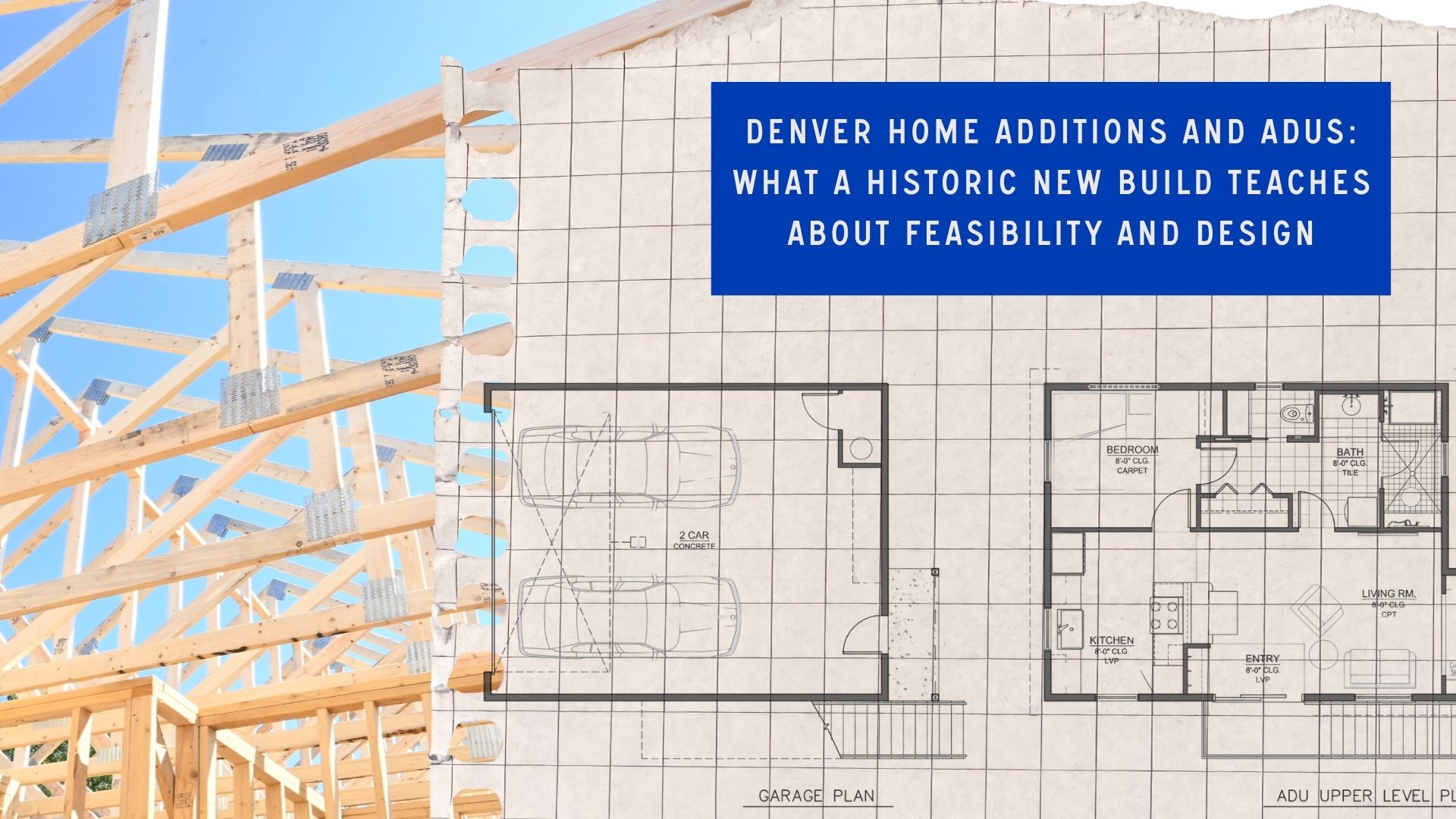
Photo of a home additoin project in framing with Sustainable Design Build.
Denver home additions and ADUs require more than design ideas. Successful projects depend on feasibility, zoning, and early planning. A concept-driven approach helps homeowners understand what is possible, what it will cost, and how to move forward with confidence.
Building With Context in Denver Neighborhoods
A recent BusinessDen article highlights a custom home on East 7th Avenue that replaced a 1950s structure considered out of place within a historic neighborhood (Hansen, 2026). Rather than simply constructing a larger or more modern home, the architect focused on restoring continuity to the street by designing a residence that aligned with the surrounding architecture.
The project required extensive coordination with the Denver Landmark Preservation Commission, where every exterior detail had to be approved before construction began. The architect described the process as designing from the outside in, working within a fixed envelope that could not be altered once approved (Hansen, 2026).
This example reflects a broader truth about building in Denver. Whether developing a custom home, planning a home addition, or pursuing an accessory dwelling unit, success depends on how well a project fits within its physical and regulatory context.
Why Feasibility Comes Before Design
One of the most important takeaways from the Seventh Avenue project is that constraints shaped the design from the very beginning. The team studied the neighborhood, refined the architecture, and navigated approvals long before construction started.
This is directly applicable to homeowners considering Denver home additions or ADU construction. Many projects begin with ideas about space or functionality, but quickly run into questions such as:
- What does zoning allow on this lot?
- How will setbacks or height limits affect the design?
- Will the project align with neighborhood expectations?
- What will it realistically cost to build?
According to the City and County of Denver, zoning regulations are structured to preserve neighborhood character while guiding growth and density (City of Denver, 2024). These requirements often define what is feasible before design even begins.
Without addressing these factors early, projects can face redesigns, delays, or budget changes later in the process.
The Role of a Structured Concept Phase
To navigate these complexities, a process-driven approach is essential. This is where a dedicated Concept Phase becomes critical in residential construction.
Rather than jumping straight into design or construction, the concept phase focuses on validating the project before major decisions are made. It bridges the gap between ideas and execution by aligning feasibility, design direction, and cost expectations from the start.
During this phase, homeowners receive:
- A clear understanding of what can be built on their property
- Design concepts that reflect both goals and constraints
- Real and accurate pricing based on a defined scope
- Actionable plans that demonstrate feasibility
This approach removes much of the uncertainty that typically surrounds home additions and ADUs. Instead of relying on rough estimates, homeowners can move forward with confidence, knowing their project has been thoughtfully vetted.
Lessons from Historic Constraints Applied to Modern Projects
The Seventh Avenue home demonstrates how working within constraints can lead to better outcomes. The fixed exterior requirements did not limit the project. They guided it toward a design that felt appropriate, cohesive, and lasting.
The same principle applies to residential projects across Denver. Constraints such as lot size, alley access, structural limitations, and zoning requirements are not obstacles. They are design parameters.
For example, an ADU may need to be positioned carefully to meet setback requirements while still achieving a functional layout. A home addition may need to integrate seamlessly with the existing structure to maintain neighborhood consistency.
Addressing these factors early leads to more efficient projects and stronger results.
Designing for Flexibility and Long-Term Value
Another key aspect of the Seventh Avenue home is its flexibility. The residence was designed to accommodate a range of living situations, from couples to multigenerational families (Hansen, 2026).
This is increasingly relevant for Denver homeowners. Additions and ADUs are often driven by evolving needs, including rental income, extended family living, or adaptable work-from-home environments.
When feasibility and design are aligned early, projects are better equipped to support these long-term uses. Spaces can be planned intentionally, rather than adjusted later through costly modifications.
A Process That Supports Better Outcomes
The broader lesson from this historic new build is not just about architecture. It is about process.
Even an experienced architect navigating a single custom home had to work through approvals, refine the design repeatedly, and operate within strict constraints. That level of diligence is equally important for homeowners pursuing additions or ADUs.
By starting with a structured concept phase, projects are grounded in reality from the beginning. Feasibility is confirmed, costs are understood, and design decisions are made with clarity.
In a city like Denver, where regulations, neighborhood context, and property conditions all play a role, this approach helps ensure that projects move forward smoothly and deliver results that feel both functional and appropriate.
References
City of Denver. (2024). Residential zoning and neighborhood context guidelines. https://www.denvergov.org
Hansen, S. B. (2026, March 13). Architect lists 7th Ave. new build that replaced 1950s eyesore. BusinessDen.
Connect With Us
Planning your next renovation, or maybe you are looking to do a complete remodel for your home? Whatever the task, it can’t hurt to ask. Reach out to our team through this form.
We can schedule a free consultation and discuss everything you need to get your project moving in the right direction. Did we mention, it’s absolutely free?