
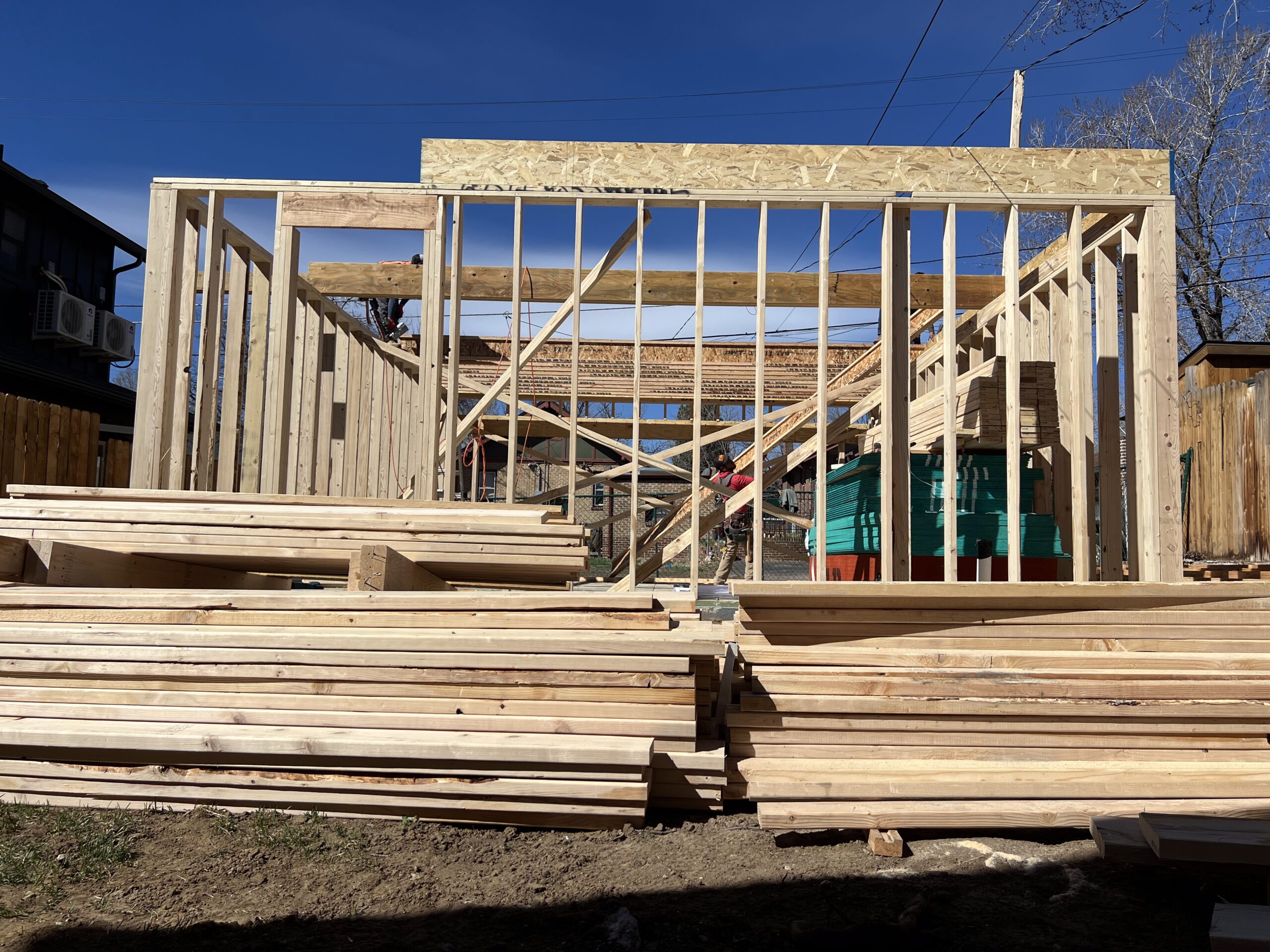
Framing progress at a Denver ADU built by Sustainable Design Build
Accessory Dwelling Units (ADUs) continue to gain traction across Denver as homeowners look for flexible living solutions, rental income opportunities, and ways to maximize their property. At Sustainable Design Build, ADU projects are approached with a clear understanding that zoning is often the most critical first step. Before design begins, it is essential to understand how Denver’s zoning code shapes what is actually possible on a given lot.
While zoning regulations continue to evolve, the following overview reflects the core considerations that currently guide most ADU feasibility conversations in Denver.
Understanding ADU Placement on Your Lot
One of the most important and often overlooked constraints is where the ADU can physically sit on the property. In Denver, detached ADUs are generally required to be located within the rear 35 percent of the zone lot. This requirement directly impacts layout, access, and overall design strategy.
In most cases, maintaining separation between the primary home and the ADU is also necessary. A typical guideline is approximately 15 feet of distance between structures. This spacing can influence how much of the ADU footprint counts toward allowable lot coverage, and it often plays a role in whether parking requirements can be efficiently incorporated into the design.
There is also a solar and privacy consideration embedded in the zoning code. Taller ADUs, particularly those exceeding one story or approximately 17 feet in height, are typically expected to align along the southern property line. This helps preserve sunlight access for neighboring properties to the north, which is a consistent priority in Denver’s planning approach.
How Lot Size Impacts ADU Footprint
The size of the lot directly determines how large the ADU footprint can be. This is one of the first feasibility checks Sustainable Design Build performs when evaluating a property.
For many standard Denver residential zones:
- Lots under 6,000 square feet typically allow up to about 650 square feet of ADU footprint
- Lots between 6,000 and 7,000 square feet may allow up to approximately 864 square feet
- Lots over 7,000 square feet can often support up to 1,000 square feet
Some zoning districts cap ADU size regardless of lot size, so it is important to verify the specific zoning designation rather than relying solely on general ranges. Additionally, total lot coverage rules can further limit what is ultimately buildable.
Building Length and Form Constraints
Denver zoning also regulates the shape of the structure, not just its size. One key limitation is that uninterrupted building walls cannot exceed 36 feet in length.
This requirement is less about square footage and more about architectural character. The intent is to avoid large, flat wall planes and instead encourage articulated, visually appealing structures that fit within existing neighborhood patterns.
From a design-build perspective, this means thoughtful planning is required early on. Layout decisions, rooflines, and façade treatments all need to work within this constraint while still delivering functional interior space.
Height, Stories, and Habitable Space
Most detached ADUs in Denver are limited to a one-and-a-half-story structure. This creates a unique design condition where the upper level cannot simply mirror the footprint below.
The general rule is that the second level can only contain up to 75 percent of the floor area of the level beneath it. For example, if the main floor footprint is 800 square feet, the upper level would be limited to 600 square feet of habitable space.
Habitable space is defined by ceiling height. Areas with lower ceiling clearance, such as under sloped roofs, may not count toward total square footage depending on how they are configured. This opens opportunities for creative design solutions, but it also requires careful planning to ensure compliance.
At Sustainable Design Build, this is where design and construction expertise come together. The goal is to maximize livable space while staying fully aligned with zoning definitions.
Rooftop Decks and Privacy Considerations
A common question from homeowners is whether an ADU can include a rooftop or second-story deck. In most Denver zoning districts, rooftop decks are not permitted within the rear 35 percent of the lot, which is exactly where ADUs are typically located.
This restriction is rooted in privacy. Elevated outdoor spaces can overlook neighboring yards, and the zoning code is designed to minimize that impact.
There are limited exceptions depending on zoning district, but in most cases, rooftop decks are not a viable option for detached ADUs. Instead, outdoor living is typically integrated at ground level through patios or landscaped areas.
Why Zoning Should Drive the Early Conversation
From a construction standpoint, zoning is not just a regulatory hurdle. It is the framework that defines what your project can become.
At Sustainable Design Build, every ADU project begins with a zoning analysis that answers key questions:
- Is an ADU allowed on this property?
- How large can it be?
- Where can it be placed?
- What design limitations will shape the project?
Answering these questions early prevents costly redesigns and ensures that the project moves forward with clarity.
Moving From Zoning to Design
Once zoning feasibility is confirmed, the next phase is translating those constraints into a functional and well-designed living space. This is where thoughtful architecture, efficient layouts, and construction expertise make a significant difference.
Every lot in Denver presents a slightly different puzzle. The most successful ADU projects are the ones that respond directly to both the zoning code and the unique characteristics of the property.
For homeowners considering an ADU, the best next step is to evaluate zoning alongside project goals. With the right approach, it is possible to create a space that adds long-term value while fitting seamlessly into the surrounding neighborhood.
Connect With Us
Planning your next renovation, or maybe you are looking to do a complete remodel for your home? Whatever the task, it can’t hurt to ask. Reach out to our team through this form.
We can schedule a free consultation and discuss everything you need to get your project moving in the right direction. Did we mention, it’s absolutely free?