


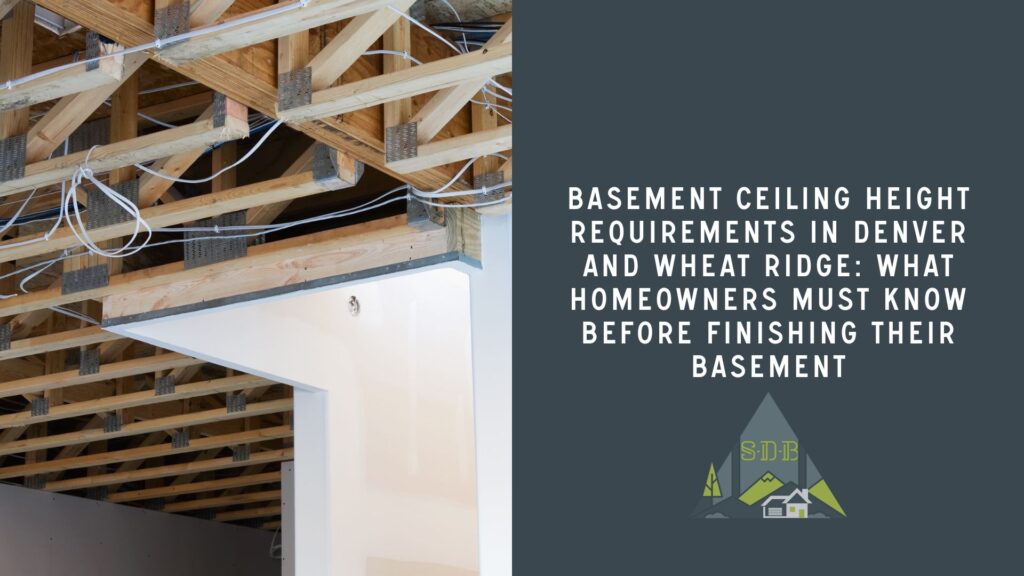

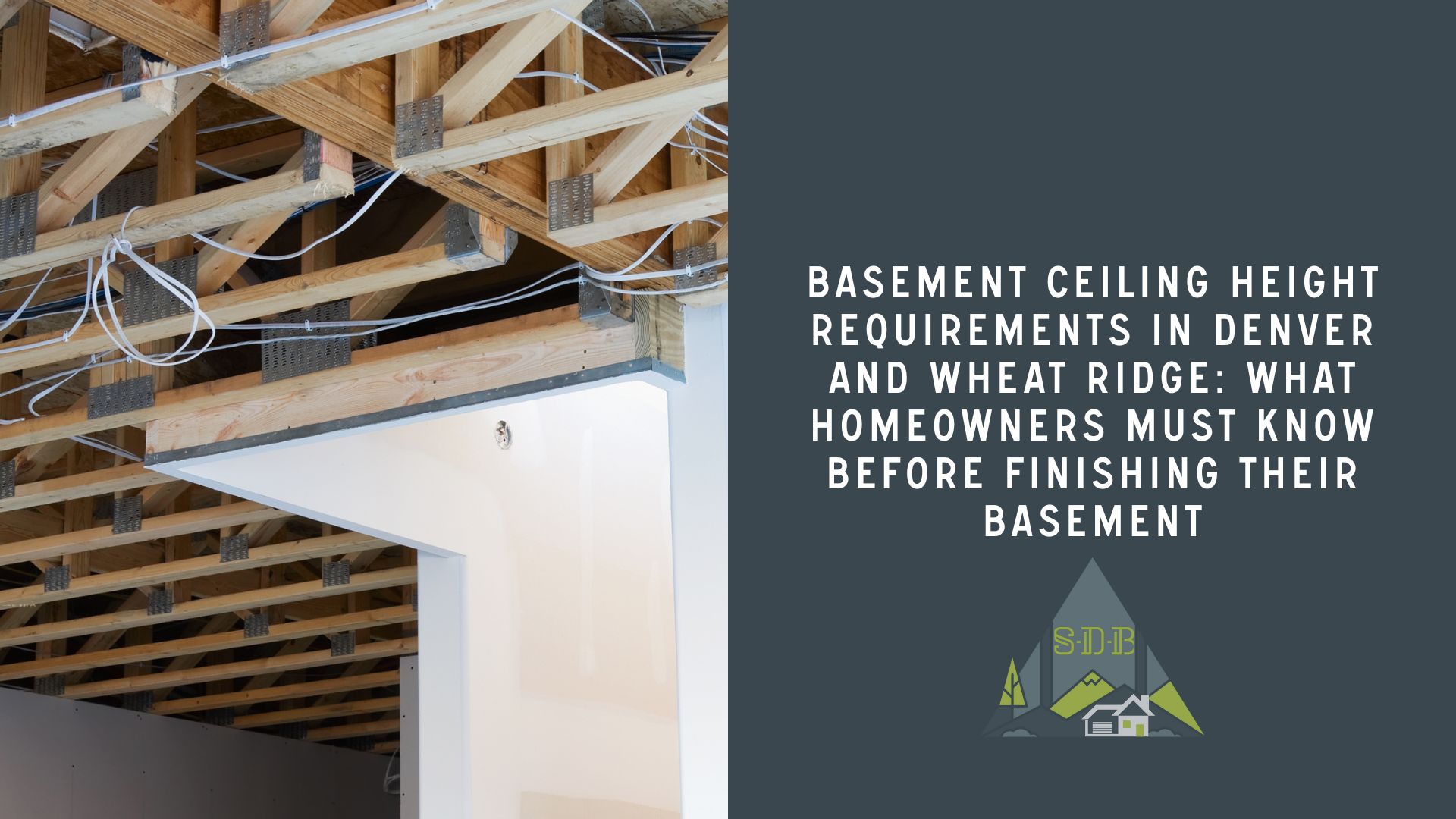
Basements in Colorado must meet specific ceiling height requirements before they can be legally finished or used as habitable space. Under current building codes, most finished basements must maintain a minimum ceiling height of 7 feet, with limited allowances for beams, ducts, or structural projections. Older homes may qualify for certain exceptions, but modifications such as structural adjustments, slab lowering, or duct reconfiguration are often required to meet code. Knowing these requirements early helps homeowners understand feasibility, permitting, and design options for a successful basement remodel.
Basement Ceiling Height Requirements in Denver and Wheat Ridge: What Homeowners Must Know Before Finishing Their Basement
Ceiling height is one of the most influential factors in determining whether a basement can be legally finished, used as living space, or converted into a bedroom. Many homes in Denver, Edgewater, and Wheat Ridge were built decades before modern building codes were adopted, often resulting in lower ceiling clearances that restrict how the basement can be designed or permitted. Because ceiling height affects safety, comfort, and code compliance, it must be evaluated before planning any basement finishing project.
Sustainable Design Build frequently works with homeowners to assess basement feasibility, structural conditions, and potential height adjustments. This article outlines the minimum height requirements, code exceptions, and common solutions that make older basements viable for finishing.
Minimum Ceiling Height Requirements for Finished Basements
Most local jurisdictions in the Denver metro area follow the International Residential Code (IRC) with local amendments. According to the IRC, habitable spaces such as living rooms, bedrooms, and hallways must provide a minimum ceiling height of 7 feet in finished basements (IRC R305.1, International Code Council, 2024).
This requirement applies to:
- Family rooms
- Bedrooms
- Recreation rooms
- Offices
- Hallways and circulation paths
Bathrooms, laundry rooms, and similar non-habitable areas may allow slightly lower clearances in specific conditions. However, habitable spaces must meet or exceed the 7-foot standard.
Allowable Exceptions for Beams, Ducts, and Structural Projections
While the minimum finished height is 7 feet, the code provides limited allowances for projections. These include:
- Beams and girders
- Ductwork
- Mechanical components
- Structural supports
These elements may project down to 6 feet 4 inches, as long as they are not excessive in width or frequency and do not obstruct required headroom (IRC R305.1.1, ICC, 2024).
Many Denver-area older homes rely on this exception to meet code, but excessive ducting or oversized beams may still prevent certification for finished space.
What if the Existing Basement Ceiling Is Lower Than 7 Feet?
Older homes in Wheat Ridge and Denver often have ceiling heights between 6 feet and 6 feet 10 inches, creating challenges for finishing or converting the basement into legal living space. When this occurs, multiple strategies may be used, depending on the home’s structure and soil conditions.
1. Lowering the Basement Floor (Slab Dig-Out)
Slab lowering is one of the most effective but complex solutions. This involves:
- Excavating soil below the existing basement slab
- Pouring a new, lower concrete foundation
- Extending or reinforcing foundation footings
- Adjusting plumbing and mechanical systems
Because Denver’s soil has varying expansion characteristics, feasibility must be assessed carefully. SDB evaluates factors such as drainage, foundation condition, and load-bearing walls before recommending this option.
2. Modifying Ductwork or Relocating Mechanical Components
Older homes often have oversized or inefficient duct layouts. Reconfiguring or replacing ductwork can restore valuable headroom. Modern low-profile ducts and mechanical systems can also help eliminate obstructions.
3. Recessed Lighting and Slim Ceiling Finishes
Using drywall alternatives, shallow ceiling assemblies, or recessed lighting can improve clearance without changing structural elements.
4. Structural Beam Adjustments
In cases where beams project excessively, engineered solutions may provide improved clearance. This may involve:
- Beam resizing
- Column relocation
- Reinforcement strategies
These modifications must be reviewed and stamped by licensed structural engineers.
Why Ceiling Height Matters for Bedrooms and Egress
Bedroom ceiling height is particularly important because bedrooms must meet both:
- Minimum ceiling height
- Legal egress requirements
A room cannot be considered a legal bedroom unless all safety standards are met. If a ceiling is too low, the bedroom will not qualify as habitable space regardless of egress window installation.
Homeowners considering basement bedrooms may also benefit from reviewing the legal basement bedroom requirements and egress window standards to ensure proper planning during design.
Impact of Ceiling Height on Design and Comfort
Even when basements technically meet code, the quality of the living space is greatly affected by ceiling height. Taller ceilings provide:
- Better natural light distribution
- Improved airflow and circulation
- More comfortable proportions for living spaces
- Increased resale appeal
Buyers often compare basement spaces based on perceived openness. As a result, basements with higher ceilings typically outperform those that barely meet minimum requirements.
Ceiling Height and Basement Finishing Costs
Adjusting ceiling height can influence the overall cost of a basement finishing project. For example:
- Dig-outs are typically the most expensive due to structural and excavation work
- Duct reconfiguration may be moderate in cost
- Lighting and ceiling material adjustments are often the most cost-effective
Homeowners planning a full renovation can reference SDB’s resource on average cost per square foot to finish a basement for additional budgeting context.
FAQ: Basement Ceiling Height in Denver and Wheat Ridge
What is the minimum ceiling height for a finished basement?
Most habitable rooms must have a minimum ceiling height of 7 feet, with limited exceptions for beams and ductwork.
Can a basement with a 6 foot 8 inch ceiling be finished?
Possibly, but it may not qualify as habitable space unless modifications are made. Structural evaluation is required.
Do bedrooms have different ceiling height standards?
Bedrooms follow the same height requirements as other habitable spaces and must also meet egress standards.
Is lowering a basement floor worth it?
Lowering the slab can provide long-term value if homeowners plan to create bedrooms or full living spaces in the basement.
Conclusion
Basement ceiling height is one of the most important early considerations when planning a basement finish. Whether homeowners are looking to create a family room, office, or additional bedrooms, understanding ceiling height requirements ensures the final space is comfortable, safe, and legally recognized as habitable. Sustainable Design Build helps homeowners evaluate feasibility, explore modification options, and integrate ceiling height solutions into a coordinated design-build plan.
Connect With Us
Planning your next renovation, or maybe you are looking to do a complete remodel for your home? Whatever the task, it can’t hurt to ask. Reach out to our team through this form.
We can schedule a free consultation and discuss everything you need to get your project moving in the right direction. Did we mention, it’s absolutely free?